The US East Coast is being battered by the first major blizzard to hit the region in four years.
Five states declared an emergency hours before heavy snow and hurricane-force winds blasted the area.
Experts warn of “historic” snowfall in some places and flood warnings have been issued near the coast. Nearly 6,000 US flights have been cancelled.
Forecasters say cold temperatures will remain a problem on Sunday throughout much of the north-east.
The storm, known as a Nor’easter, could blanket the Boston area with up to 2ft (61cm) of snow, and around 2ft (60cm) of snow has already fallen in parts of New York state.
Parts of Maine could receive up to 12in (30cm) of snow on Saturday night.
The National Weather Service (NWS) confirmed on Saturday that the storm had undergone bombogenesis, meaning that colder air mixed with warmer sea air, leading to a swift drop in atmospheric pressure. The process leads to a so-called bomb cyclone.
“Bombogenesis means that the storm undergoes rapid intensification,” Connecticut meteorologist Ashley Baylor told the BBC.
“24 hours ago this was barely a developing low off the coast of the Carolinas, and now it’s this massive storm system.”
The NWS in Boston warned that people should only travel in an emergency.
“If you must travel, have a winter survival kit with you. If you get stranded, stay with your vehicle.”
The powerful storm began to hit the country’s coast in the early hours of Saturday morning, with inches of snowfall already blanketing a number of states.
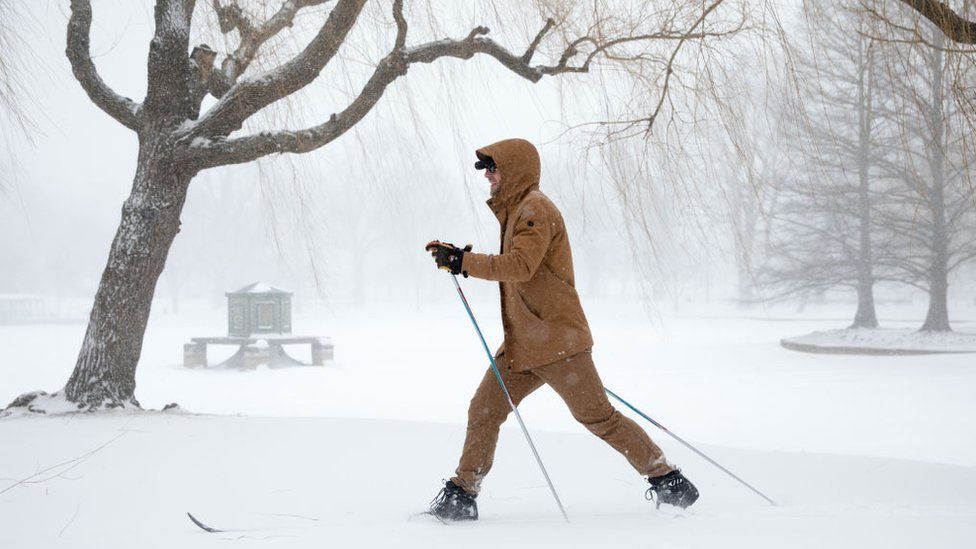
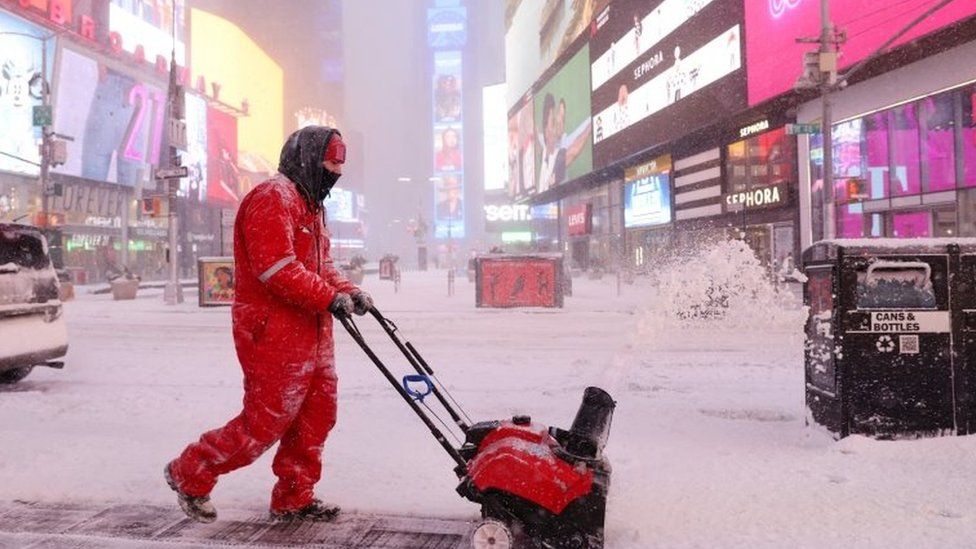
A blizzard warning has been issued throughout the north-east, the first time such an alert has been issued since 2018.
Some 75 million people are in the path of the storm. The governors of New York, New Jersey, Maryland, Rhode Island and Virginia declared states of emergency, telling residents to stay off the roads for their own safety.
“It’s high winds, heavy snow, blizzard conditions – all the elements of a classic Nor’easter,” New York Governor Kathy Hochul said on Saturday. She warned that freezing temperatures would continue to cause problems after the snow had stopped.
Police in New Jersey’s Atlantic City pleaded with residents not to “make it harder on our first responders by venturing out”, while Governor Phil Murphy said that the state’s famous shoreline “is getting clobbered” by the storm.
In Connecticut bus operations have been suspended until Sunday, while Rhode Island Governor Dan McKee has announced the closure of several bridges due to “dangerous conditions”.
Despite the warnings some people were determined to enjoy themselves in the snow. In New York, children played on sleds in Central Park and a snowball fight broke out in Washington Square Park.
Florida, usually known for its mild winters, is also expected to see some of its coldest temperatures in years, which could lead to iguanas – a cold-blooded lizard species – to become immobilised and fall out of trees.