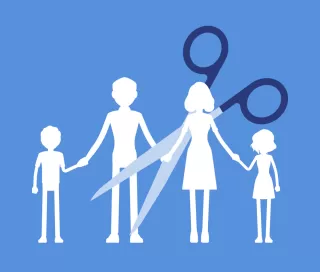
Family relationships can bring profound joy but also deep frustration. Recently, there’s been a growing trend to cut family out of one’s life when conflicts arise or emotional pain becomes too much to bear.
This choice, known as “family cutoff,” is often applauded as an act of self-preservation. While it might seem like a solution, research and Bowen Family Systems Theory suggest that cutoff can carry lasting emotional and relational consequences for individuals and future generations.
The Cycle of Cutoff
As a family therapist, I often witness how cutoff cycles through family lines. When one member severs ties, it sets a pattern where others see avoidance of conflict as the only option. Over time, these repeated cutoffs create families that rely on disengagement rather than healthy communication or resolution. What may start as a self-protective choice can end up damaging broader family relationships.
Bowen Family Systems Theory sheds light on this behaviour, defining cutoff as a way individuals distance themselves from family members to manage stress or emotional pain. This might mean physical separation, lack of communication, or total estrangement. While cutoff can occur in any dynamic—between parents and children, siblings, or extended family members—it’s often an emotional reaction to unresolved relational tension.
The problem with a cutoff is that while it aims to reduce discomfort in the short term, it rarely addresses the deeper issues at hand. These unresolved emotional ties remain beneath the surface, potentially leading to further cutoffs or perpetuating unhealthy patterns across generations. Left unchecked, a cutoff can create an environment where meaningful relationships diminish.
Research on Family Estrangement
Family estrangement is not as rare as some might assume. A 2020 survey by the organisation Stand Alone found that over 25 percent of adults in the U.S. had experienced family estrangement at some point, with about 12 percent actively estranged from at least one family member. Parental estrangement, particularly between adult children and their parents, is among the most common forms.
While the immediate aftermath of cutoff may bring relief for some, its long-term consequences often come at a high cost to emotional and physical well-being. Research highlights several important findings on the effects of estrangement:
- The Impact of Loneliness: Studies, such as one conducted by Stokes et al. (2021), show that social isolation significantly increases all-cause mortality risk, often equating the effects of loneliness to other major health risks like smoking or obesity.
- Estrangement’s Emotional Toll: Both estrangers and those estranged often report feelings of grief, shame, and unresolved anger. Estrangement can lead to symptoms of anxiety and depression, though more research is needed to further quantify its emotional toll.
- Generational Effects: Family estrangements often disrupt the flow of connection and shared history, fragmenting the sense of identity for younger generations. Bowen’s theory underscores how patterns of disengagement ripple across families, reshaping the dynamics of connection for decades.
Despite these outcomes, it is essential to acknowledge that cutoff isn’t inherently “good” or “bad.” For some, estrangement provides crucial distance from abusive or deeply harmful relationships. However, as a widespread coping strategy, the practice raises important questions about emotional health and family legacy.
Understanding Cutoff Through the Systems Lens
Bowen Family Systems Theory views relationships as interconnected and reciprocal, meaning tension in one area affects the entire family system. From this perspective, cutoff is often a response to unresolved emotional conflict and an attempt to create instant relief by removing the source of discomfort. However, this approach rarely addresses the root cause of tensions.
Instead, cutoff typically offers an illusion of calm while leaving emotional patterns like guilt, resentment, and attachment needs unresolved. These unresolved issues often resurface with romantic partners, friends, or colleagues, perpetuating conflict in other areas of life.
Human beings are biologically and psychologically wired for connection. Research across psychology, neuroscience, and epidemiology consistently finds that close relationships are critical to life satisfaction, resilience, and even longevity. While certain family ties may genuinely need to end, maintaining some level of connection—even if limited by strict boundaries—is often healthier than total estrangement.
Alternatives to Family Cutoff
For those contemplating estrangement, it’s worth considering alternative strategies before making a permanent decision. Here are a few options that families may find helpful:
- Boundaries
Instead of cutting ties entirely, try setting firm boundaries that preserve emotional well-being. This might mean limiting contact frequency, defining nonnegotiable rules around certain topics, or stepping away when behavior feels disrespectful. - Therapeutic Support
Enlisting a family therapist, mediator, or counselor can help untangle longstanding pain and foster new communication patterns. Therapy can create a safe space to de-escalate conflict and better understand one another’s perspectives. - Differentiation of Self
Strengthening your ability to define and hold your own values and emotions while remaining centered amidst family tension is a powerful tool. This concept, known as differentiation of self, allows you to stay connected without being overly reactive to others’ responses. - Dialogue Without Resolution
Not all conflicts have perfect solutions, but finding clarity and shared understanding is often possible. Even if reconciliation isn’t likely, honest conversations can help reduce the anger or resentment that drive estrangement. - A Temporary Pause
Sometimes, a temporary break from family interactions provides a better perspective without closing the door on future reconciliation. This approach offers space for reflection and cooling down before making long-term decisions.
Building a Legacy of Connection
Family patterns are complex, and estrangement is a deeply personal decision. While it can provide necessary relief for some, cutoff often closes the door on meaningful relationships and healing opportunities. By investing in healthier ways to resolve conflict or establish boundaries, families can not only repair relationships but also create a ripple effect of connection for future generations.
Ultimately, family connection is a vital part of emotional health and well-being. For those willing to lean into the hard work of understanding and mutual growth, the rewards of repairing relationships far outweigh the challenges. The question to ask is not just what feels right for now but what kind of legacy you want to create for your family and yourself in the long term.