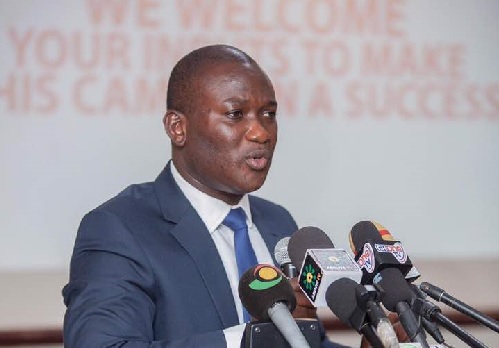
Economist and University of Ghana lecturer, Professor Patrick Asuming, has challenged efforts by state institutions to downplay the International Monetary Fund’s (IMF) assessment that Ghana recorded a $214 million loss under the Gold for Reserves Programme, stressing that the information came directly from the government itself.
Prof Asuming said the IMF’s conclusion should not have surprised authorities such as the Ghana Gold Board and the Bank of Ghana.
According to him, the IMF does not generate such figures independently but relies on data submitted by the Government of Ghana.
“The IMF was very clear about the $214 million, and it described it as a loss,” he said.
“This information is reported by the government to the IMF, so it is not something the Fund simply made up.”
His comments come amid intense political debate following claims by the Minority Caucus in Parliament that the Ghana Gold Board incurred a $214 million loss from gold trading under the programme.
The Majority Caucus has rejected this, arguing that the figures have been misinterpreted and should not be described as a loss.
Prof Asuming, however, argued that once the government submits financial information to the IMF, it should expect the Fund to analyse and publish its findings as part of Ghana’s IMF-supported programme.
“The government would have known this information would be published,” he noted.
“So trying to reclassify it afterwards as not being a loss is surprising.”
He clarified that the IMF’s concern is not about stopping the Gold for Reserves Programme but about ensuring that any losses are not absorbed by the Bank of Ghana, as this could undermine the central bank’s ability to function effectively.
“The IMF’s worry is that the loss should not sit on the books of the central bank because that affects its operational capacity,” he explained, adding that the Fund has not called for the programme to be suspended.
Responding to claims that the loss can only be confirmed after audits by the Ghana Gold Board, Prof Asuming dismissed the argument, pointing out that IMF reporting occurs at different intervals, including monthly, quarterly and annually.
“If the government has reported the data and the IMF has analysed it, the response should not be denial,” he said.
While acknowledging that the Gold for Reserves Programme has helped boost Ghana’s reserves and delivered some benefits, Prof Asuming urged authorities to accept the IMF’s concerns in good faith and focus on reducing the associated costs.
“The IMF is simply flagging that these costs should not be transferred to the central bank. We should accept that and work to minimise the losses,” he concluded.
The Gold for Reserves Programme was introduced by the Bank of Ghana to strengthen foreign reserves, stabilise the cedi and reduce dependence on foreign exchange markets as part of Ghana’s ongoing IMF-supported economic recovery efforts.