In Ghana, the independence of the judiciary has long stood as a sacred cornerstone of our democratic architecture.
It is the final refuge for citizens in distress, the balancing force between the powerful and the powerless, and a key indicator of the health of our democratic experiment.
However, recent developments, most notably, the suspension of the Chief Justice, have triggered widespread alarm. Many Ghanaians are now asking: Is judicial independence under threat? Are we watching the slow, painful death of one of the last truly independent arms of government?
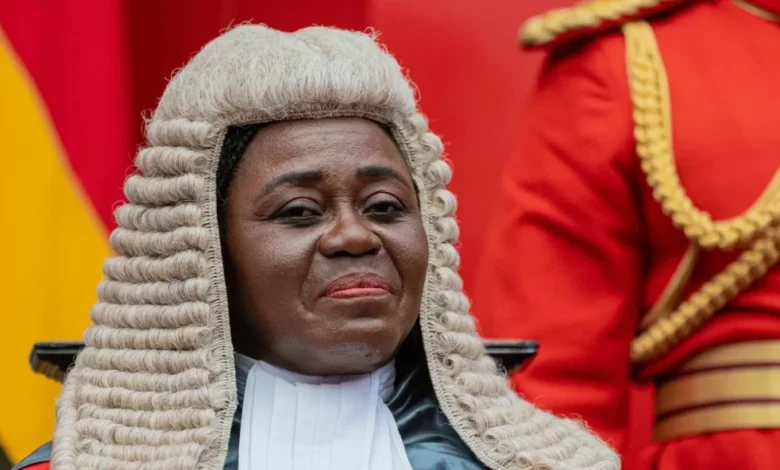
The suspension of a sitting Chief Justice is no small matter. It is unprecedented in its weight and implications. The Chief Justice is not just the administrative head of the judiciary; they embody the moral and institutional backbone of justice in Ghana.
So, when such a figure is removed, especially amid allegations or without full transparency, it sends ripples through the entire legal and political ecosystem. Whether justified or not, the opacity surrounding this process undermines confidence in the very institution meant to uphold fairness.
To be clear, accountability must apply to everyone, including top judicial officers. If the Chief Justice is suspected of any wrongdoing, there are laid-down constitutional procedures to investigate and, if necessary, sanction them. But what Ghanaians must demand is a process rooted in transparency, legality, and fairness, not political calculation or behind-the-scenes manoeuvring. Any deviation from this invites speculation and erodes public trust.
The larger fear here is not simply about one individual but about the potential politicization of the judiciary as a whole. Over the past decade, there has been a growing perception that appointments to the bench are increasingly driven by political loyalty rather than merit or impartiality.
From High Court judges to the Supreme Court, whispers of favouritism, political patronage, and undue influence have become disturbingly common. The fear now is that judicial officers may begin to self-censor or skew their judgments out of fear of retaliation—a scenario that would spell disaster for democracy.
The suspension of the Chief Justice may, in the worst case, embolden political actors to interfere more freely in the judicial process. It may set a dangerous precedent that judicial independence is negotiable depending on who holds political power. That alone should worry every Ghanaian, regardless of party affiliation.
Ghana’s 1992 Constitution is explicit: Article 127 states that “in the exercise of the judicial power of Ghana, the Judiciary… shall not be subject to the control or direction of any person or authority.” These are not ornamental words. They are the foundational ethos of our justice system. When judicial officers operate under the threat of dismissal or disciplinary action based on political motives, this sacred principle is violated.
What is needed now is a national reckoning. Civil society organizations must speak up with a unified voice, not necessarily to defend individuals, but to protect institutions. The Ghana Bar Association, in particular, cannot afford to remain neutral. Parliament, too, must step up and assert its constitutional responsibility by demanding accountability and ensuring that no abuse of process is allowed to go unchecked.
Equally important is the role of the media. Instead of trading in gossip and political spin, journalists must highlight the facts and ask the difficult questions that many fear to pose. The public deserves to know the truth, not filtered narratives shaped by partisan interests.
As citizens, we must understand that the judiciary is not just an abstract arm of government; rather, it is our line of defence against tyranny, corruption, and injustice. Today, it may be the Chief Justice; tomorrow, it could be an ordinary judge standing up for what is right, or a whistleblower who dares to speak the truth.
In the end, the question is not just whether the judiciary is dying in darkness, it is whether we, as a nation, will allow that darkness to prevail. Ghana’s democracy, while vibrant in many respects, is still evolving. We must fiercely guard the independence of our judiciary if we hope to build a just, fair, and prosperous society for all.
Justice must not only be done, but it must also be seen to be done. And today, more than ever, Ghana must choose light over darkness.
By: Dominic Ebow Arhin
B.A Political Science – University of Ghana
MSc. Student – Climate Change and Sustainable Development – University of Ghana