Health experts are raising fresh concerns over the country’s readiness to tackle sepsis, a life-threatening condition that arises when the body’s response to infection causes injury to its own organs.
Despite its severity, the true burden of sepsis in Ghana and across sub-Saharan Africa remains largely invisible due to poor documentation and inadequate health system response.
The Sub-Saharan Consortium for the Advancement of Innovative Research and Care in Sepsis (STAIRS) is calling for urgent policy reforms, targeted interventions, and improved data collection to help prevent avoidable deaths.
Globally, over 50 million people with infections develop sepsis each year, and 11 million of them do not survive. Yet in Ghana, health systems often fail to track or respond adequately to the condition.
“The burden of the affected rests on low-resource countries like Ghana,” said Dr. John Adabie Appiah, Principal Investigator of STAIRS.
“We are bearing the most brunt and our health care is weak to handle such cases. We need to have the resources to be able to manage the organ that’s failing. If the kidney is failing, you’d need machines that can sustain the person’s life in the process of treatment.”
Sepsis can be triggered by seemingly common infections like malaria or diarrhoea. When left untreated, it can severely damage the brain, lungs, kidneys and other organs.
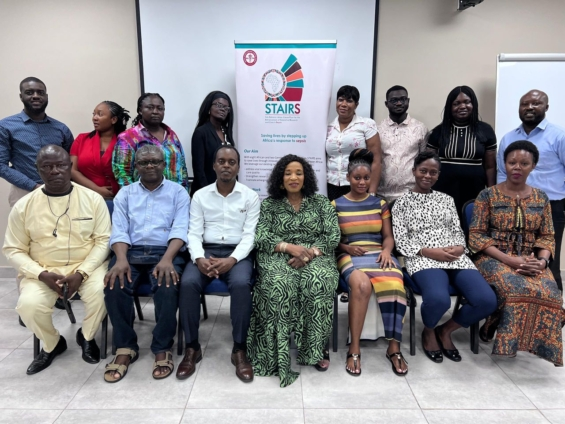
At a two-day sepsis capacity-building event held in Kumasi, Dr. Appiah stressed the critical need for reliable data and research to drive policy and improve clinical care.
“The data WHO relies on is modelling data to conclude or estimate. For us to understand the magnitude of the problem, we need to start counting so we can reliably refer to the numbers,” he said.
“It even helps hospital managers, doctors, nurses and policy makers to understand and allocate resources as needed and come up with protocols and guidelines on how to treat sepsis well.”
STAIRS aims to bridge major information and treatment gaps by conducting high-quality research focused on the epidemiology, diagnosis and care of sepsis patients in under-resourced settings.