In the Democratic Republic of the Congo’s monkeypox outbreak, sickness and death go undetected.
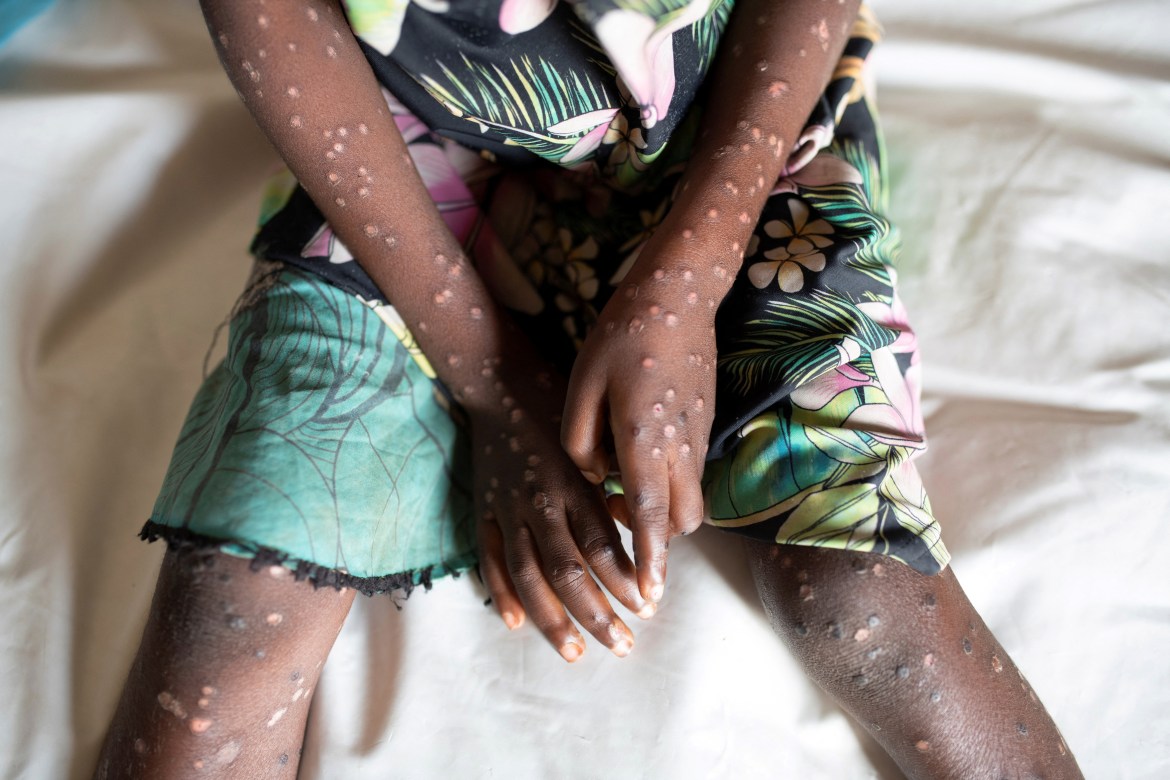
Yalolia, Democratic Republic of the Congo – At a village clinic in central Democratic Republic of the Congo, separated from the world by a tangle of waterways and forests, six-year-old Angelika Lifafu grips her dress and screams as nurses in protective suits pick at one of hundreds of boils troubling her delicate skin.
Her uncle, 12-year-old Lisungi Lifafu, sits at the foot of her bed, facing away from the sunlight that pours through the doorway, with his swollen, weeping eyes. When nurses approach, he raises his chin, but cannot look up.
- Advertisement -
Angelika has monkeypox, a disease first detected in DRC 50 years ago, but cases of which have spiked in West and Central Africa since 2019. The illness received little attention until it spread worldwide this year, infecting 77,000 people.
Global health bodies have counted far fewer cases in Africa during the current outbreak than in Europe and the United States, which snapped up the limited number of vaccines this year when the illness arrived at their shores.
But the outbreak and death toll in the DRC could be much greater than official records say. The Africa Centres for Disease Control and Prevention (CDC) acknowledged that its data did not capture the full extent of the outbreak.
- Advertisement -
The Africa CDC says the DRC has had more than 4,000 suspected and confirmed cases and 154 deaths this year, based in part on health authority data. That is far lower than the 27,000-odd cases recorded in the United States and 7,000 in Spain.
Elsewhere in Africa, Ghana has about 600 suspected and confirmed cases, and in Nigeria, there are nearly 2,000.
“Yes, there is an undercount,” said Ahmed Ogwell Ouma, acting director of the Africa CDC. “The communities where the monkeypox is spreading generally don’t have access to regular health facilities.” He said the CDC could not currently say how big the undercount was.
No monkeypox vaccines are publicly available in Africa.
- Advertisement -
While the sudden demand from Western countries sucked up available vaccines, poorer countries such as the DRC, where the disease has existed long enough to be endemic, have barely received any supplies from the WHO and partners.
The country’s health minister Jean-Jacques Mbungani said testing capabilities were lacking outside Kinshasa but did not respond to a request for comment about missed cases. He said the DRC was in talks with the WHO to buy vaccines, but no formal request had been made.
A spokesperson for Gavi, the vaccine alliance, said it had not received requests from African countries where the virus was endemic.
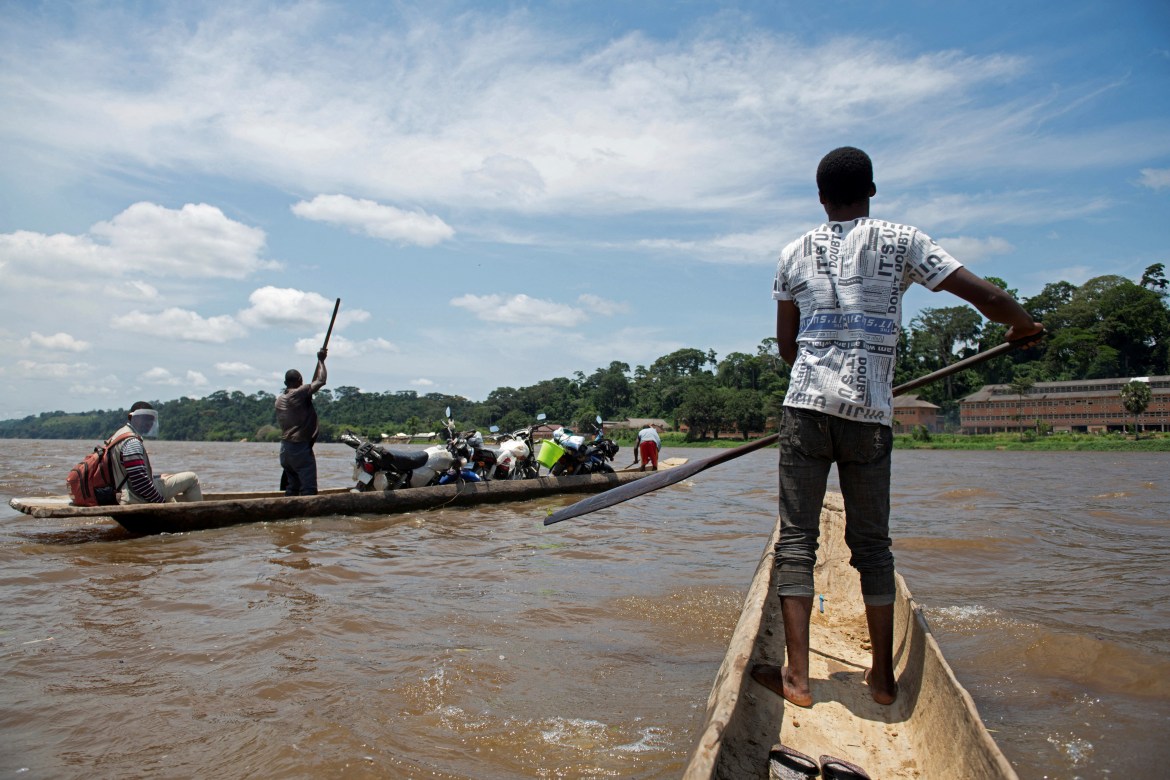
Fishermen cross the Congo River in Yakusu, Tshopo, Democratic Republic of the Congo. Tshopo, nearly as big as the United Kingdom, is heavily wooded and carved up by the Congo river and its many winding tributaries
Theopiste Maloko, 42, a local health official, crosses the Congo river to collect skin samples for possible cases of monkeypox in villages under his supervision, in Tshopo. To avoid spoiling, samples need to be kept cold and reach a laboratory within 48 hours, but they often do not, he said.
Theopiste Maloko, 42, a local health official, checks lesions on the arms of a woman who is suffering from monkeypox and recently lost a child to the same disease, in Yalokombe, Tshopo.
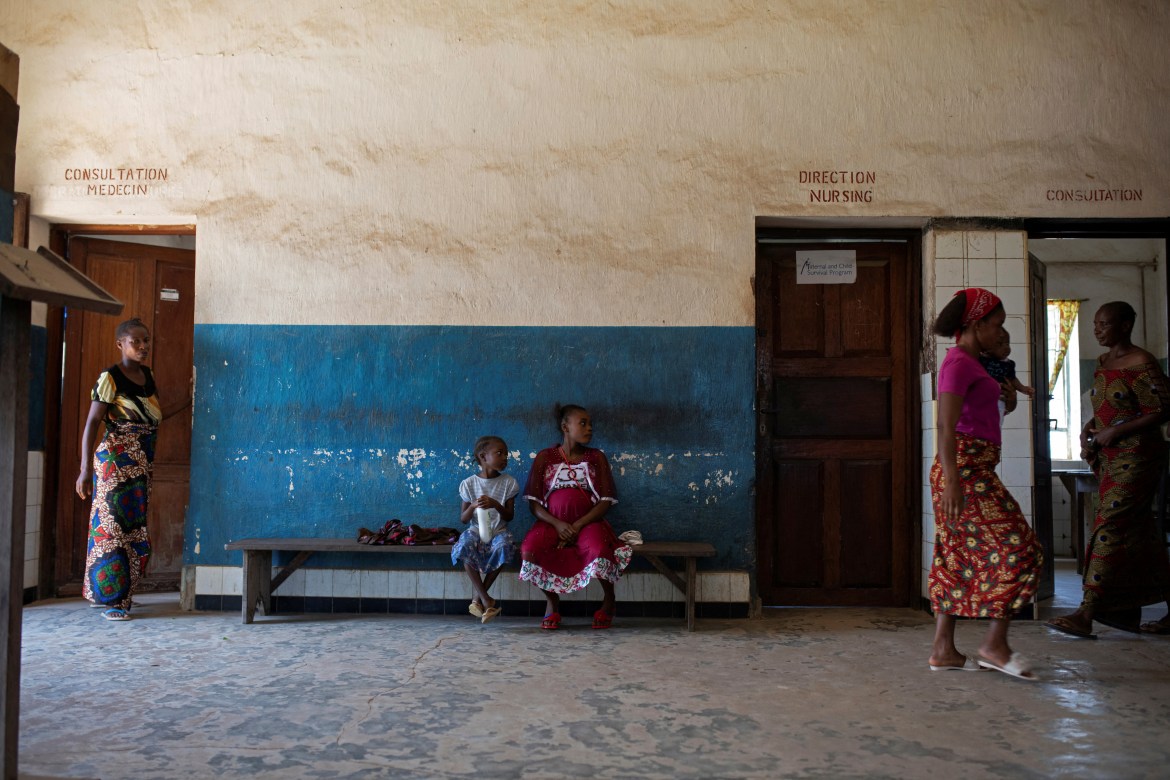
Women and their children wait for a consultation with Dr Fabien Kongolo in the waiting area of the Yakusu General Hospital, Tshopo.
Angelika Lifafu, 6, who is suffering from suspected monkeypox, sits on a bed at the Yalolia health centre.
Theopiste Maloko, 42, a local health official, leaves a room in which a probable case of monkeypox is being treated at the Yalolia health centre.
Nurses arrange medicine on a table, at the Yalanga health centre, in Yakusu, Tshopo. The village of Yalanga is a day’s journey from Yalolia by land and boat. Surrounded by jungle, it has no phone network or electricity.
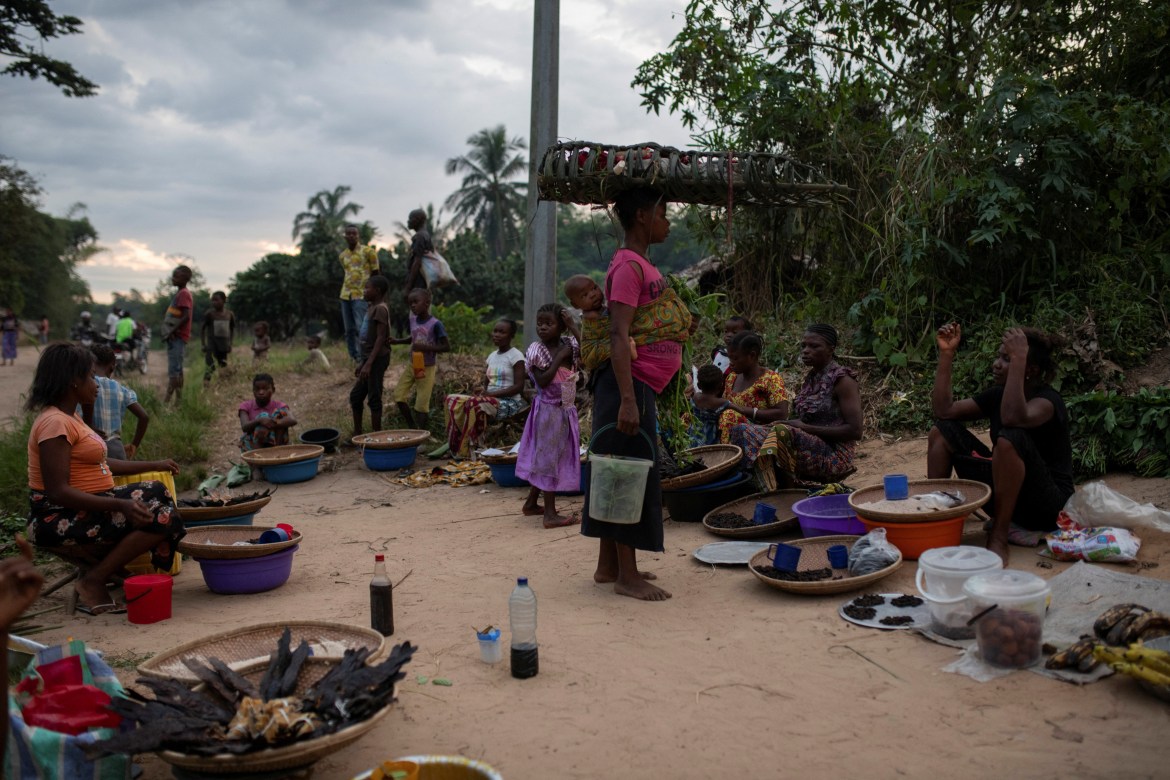
A woman buys groceries at the evening market in Yakusu village, Tshopo, Democratic Republic of the Congo, on October 4, 2022.
Beyande Kidicho, whose children Miracle Kidicho, 3, Dorcs Kidicho, 9, and Nathan Kidicho, 6, are all suffering from monkeypox, holds a bush rat brought home by his eldest son in the village of Yalokombe. Monkeypox was first detected in the DRC 50 years ago, but cases have spiked in West and Central Africa since 2019. The illness received little attention until it spread worldwide this year, infecting 77,000 people.
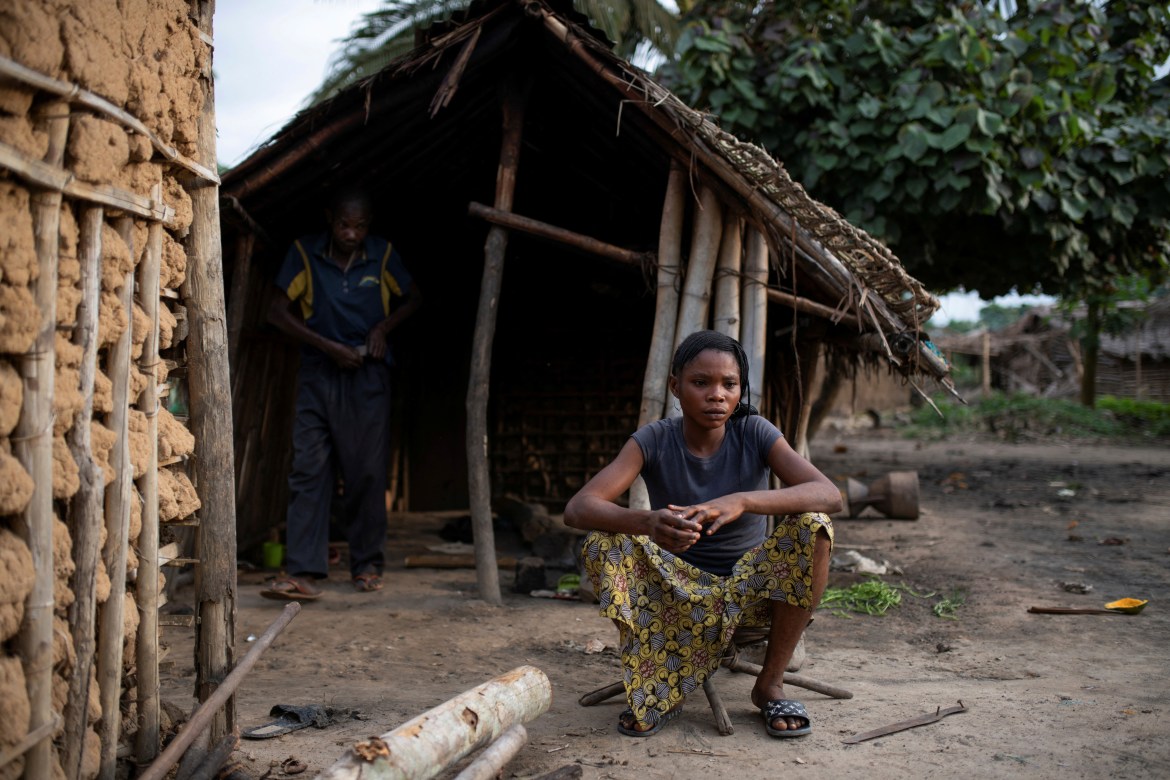
Lyatali Lofemba, whose three-year-old child died from monkeypox, sits in front of her house in Yaboya village, Yakusu, Tshopo.
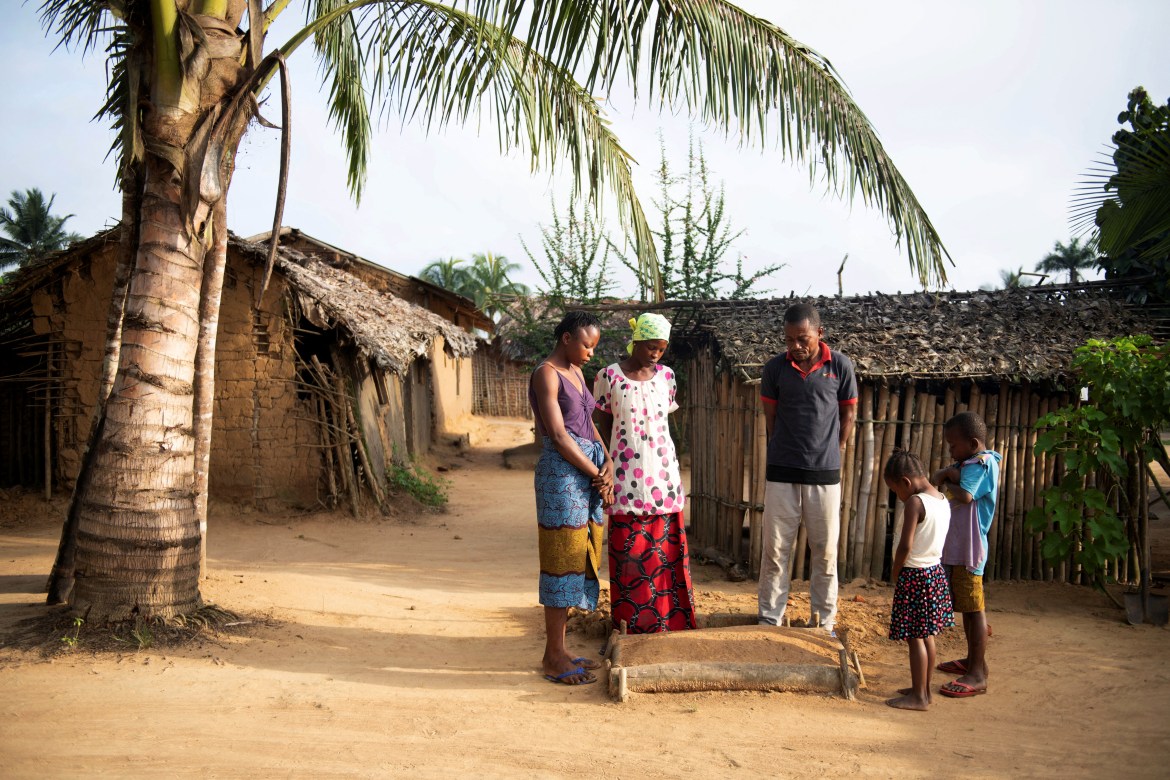
Lituka Wenda Dety, 41, who is suffering from monkeypox, prays with her family at the grave of her baby who died when she was six months old of the same disease, in the village of Yalanga, in Yakusu, Tshopo, Democratic Republic of the Congo, on October 3, 2022. At the height of her illness, Dety’s throat was so sore she struggled to swallow her own saliva. Round scars still dot her body, and her bones ache. When she was ill in hospital, her six-month-old son caught monkeypox and died. He is buried in a patch of sandy earth beside her mud brick home. “We want there to be a vaccination campaign,” she said. ‘Going by what we have suffered, if many people catch this disease it will be catastrophic.’