By Dr. Kwadwo BOATENG
Safer roads don’t just save lives; they cut logistics costs, shrink insurance losses, reduce inventory buffers, and make Ghana a better place to do business.
Lede: The delivery that never arrived
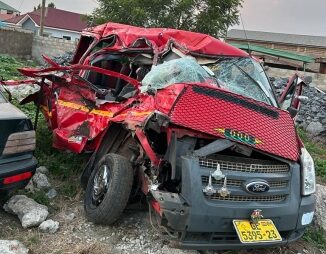
At 5:42 a.m., a refrigerated truck pulls out of Tema. By 7:10 a.m., it is idling in a tailback near a crash site, the driver’s breath fogging the windscreen while dispatch keeps phoning for updates. The grocer expecting fresh produce pays overtime. A small factory waiting on inputs misses an export cut-off and pays for airfreight.
The truck eventually arrives—the margins do not. Now ask the uncomfortable question: if the cheapest industrial policy is the crash that never happens, why are we not treating road safety as a core competitiveness strategy?
“The cheapest industrial policy is the crash that never happens.”
The macro case — crashes as an economic tax
Globally, road crashes kill roughly 1.19 million people each year, with low- and middle-income countries bearing the heaviest toll, losing 1–3% of GDP to medical costs, lost productivity, and damaged property.
Ghana is living this reality. Provisional data show 1,504 deaths in the first half of 2025, up from 1,237 in the same period of 2024. Older estimates peg Ghana’s annual crash cost at about 1.6% of GDP, the kind of structural drag that compounds if left unchecked.
Competitiveness scoreboard — reliability investors can bank on
When boardrooms assess locations, they buy reliability. Ghana’s 2023 World Bank Logistics Performance Index places us 97th of 139 countries with an overall score of 2.5/5. The sub-scores tell a sharper story: tracking & tracing and timeliness lag peer reformers, a signal that supply chains face unpredictable cycle times. Investors read that as higher working capital, higher insurance premiums, and lost sales.

Who really wears our roads — and who should pay more
Pavement damage doesn’t rise in a straight line; it explodes with axle load, the ‘fourth‑power law.’ Heavy goods vehicles (HGVs), especially transit trucks carrying Sahel‑bound cargo from Tema across long distances, impose outsized wear.
The policy principle is simple: light vehicles pay a modest fee; local HGVs pay by axle and distance; and transit HGVs pay a higher, distance‑based corridor fee collected electronically (RFID/ANPR) and verified by weigh‑in‑motion. Ring‑fence that revenue to fix high‑risk blackspots and maintain the very corridors these trucks use.
Balance sheets feel it — insurance and claims
Crashes are not only a public‑health crisis; they are a financial drain. Ghana’s insurers paid roughly GH¢3.3 billion in claims in 2024, about GH¢9.2 million every day across life and non‑life lines, a material share from motor.
Reduce crash frequency and severity, and loss ratios improve; premiums stabilise; coverage can deepen for SMEs. In a capital‑scarce economy, every cedi not paid out on avoidable crashes can underwrite growth.
Factory-floor economics — inventory, spoilage, and on-time delivery
Operations managers live by brutal arithmetic: when lead‑time variability spikes because a crash locks a junction, firms must hold more safety stock, borrow more to finance it, and absorb spoilage/obsolescence.
Cutting peak‑hour incident disruptions directly reduces days‑on‑hand and overtime, while raising on‑time delivery, the metric retailers and exporters watch most. This is why road safety is not a social add‑on; it sits in the cost of goods sold.
What works — a five-lever safety & reliability bundle
1) Speed management at blackspots. Automated speed enforcement is the fastest, fairest way to pull down severe crashes.
2) High‑impact junction ‘surgery’. Ban the most conflict‑heavy turns at peaks; extend turn pockets to prevent spillback; retime signals quarterly; add protected phases near schools and markets.
3) Fleet standards. Professional driver training, fatigue rules, speed governors for buses/HGVs, load‑security protocols, and basic telematics (harsh‑brake/speed alerts) shift behaviour at scale.
4) Safe design for vulnerable users. Markets and school zones require pedestrian‑first geometry and managed bays; the surge in pedestrian knockdowns underlines the urgency.
5) Rapid clearance. Incident command and tow‑away ‘hot hours’ restore flow quickly; every minute saved limits secondary crashes and lost output.
Training as policy — a national upskilling agenda for operators
Make training the engine of reform. A cohort‑based Transport Operator Academy led by MDPI can certify HGV and bus/trotro operators in defensive driving, fatigue management, load security, telematics use and cost control. Tie completion to insurance discounts, priority access to municipal loading bays, and compliance points for route permits. The message is not punishment; it’s professionalisation.
Funding the fix — without new taxes
Don’t raise rates; re‑aim them. Reinstate tolling on engineered corridors via multi‑lane free‑flow e‑tolling (no booths), and charge transit HGVs a higher corridor fee commensurate with wear. Use RFID tags and ANPR cameras to collect at speed, backed by weigh‑in‑motion for axle‑based pricing.
Ring‑fence a defined share of that revenue to a Safety & Reliability Fund that delivers: the top 50 blackspots (civil + signal fixes), automated enforcement at the worst 20 sites, and an incident‑clearance program (tow trucks + protocols). Every cedi should be traceable on a public dashboard that reports collections, works delivered and crash reductions by corridor.
ROI & scoreboard — prove value fast
A conservative, first‑year business case practically writes itself: avoided crash costs (medical, property, delay) tied to the 1–3% of GDP global range and Ghana’s historic 1.6% benchmark; a 10–15% drop in severe motor claims that improves sector loss ratios; and a 10–20% improvement in 90th‑percentile corridor travel times, which means smaller safety stocks and fewer write‑offs.
Publish a quarterly scorecard that tracks deaths/serious injuries; corridor average and 90th‑percentile travel times; automated violations and appeals; incident clearance times; and on‑time delivery rates among partner firms. If the numbers do not move, change the tactics. If they do, scale.
Policy milestones (12 months)
Policy milestones for 12 months: Q1—designate the top 50 blackspots; install the first 20 camera sites; launch two MDPI operator cohorts. Q2—retime 25 junctions; implement weigh‑in‑motion on two freight corridors; publish Scorecard 1. Q3–Q4—expand automated enforcement; deliver blackspot civil works; publish Scorecards 2–3; table a Safety & Reliability Fund report in Parliament.

Call to Action — Make Safety Core Industrial Policy
To Cabinet, MMDAs, NRSA, MTTD, NIC, insurers, shippers, and transport operators: treat road safety as a competitiveness strategy, not a side project. Fewer crashes mean lower logistics costs, more stable insurance premiums, smaller inventory buffers, and, most importantly, lives saved.
Dr. Boateng is the Ag. Director of Research and Productivity with the Management Development & Productivity Institute (MDPI), a Lead Researcher, and AI Expert Trainer.