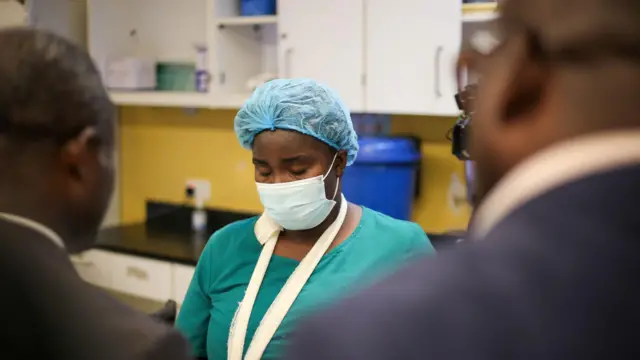
The Ridge Assault Investigative Committee has presented its findings to Health Minister Kwabena Mintah Akandoh following the August 17, 2025, incident at the Greater Accra Regional Hospital’s Emergency Department (GARH).
The incident sparked public outcry after video footage of the alleged assault went viral. Below are the key findings of the committee:
No Delay in Emergency Care
The committee confirmed that there was no delay in attending to the patient with a suspected head injury, contrary to claims that sparked the confrontation.
However, it found that all diagnostic imaging equipment (X-ray, CT scan, and MRI) at the Emergency Department was non-functional. As a result, tests had to be done outside the facility, causing delays in treatment and contributing to public frustration.
No Confirmed Physical Assault, But Verbal Altercation Recorded
Video evidence submitted to the committee showed a verbal altercation between Mr. Ralph St. Williams, some riders, and hospital staff. However, no video or eyewitness account confirmed a physical attack.
The alleged victim, Ms. Rejoice Tsotso Bortei, a rotation nurse, reported pain in her left hand the day after the incident. Her medical records confirmed she had no fractures or dislocations and was treated with pain relief and psychological support.
Security Found to Be Inadequate
The committee concluded that security at the Emergency Department was grossly inadequate. At the time of the incident, only one private security officer was on duty per 12-hour shift, which was deemed insufficient given the volume of patients.
Although a police post exists on the hospital premises, it is located far from the Emergency Department, making emergency response time slow. The hospital often relies on the Adabraka Police Command to restore order during incidents.
Severe Staff Shortages
The report highlighted a critical shortage of medical personnel at GARH. In August, only one medical officer per shift was assigned to the Emergency Department, with a total of just seven medical officers and two specialists for the entire month.
Among 88 nursing staff meant to work at the Emergency Department monthly, only 54 were at post, with 34 having vacated their positions without replacements. This has significantly strained the hospital’s capacity to manage emergency cases.
Emergency Department Overstretched
The Emergency Department was described as extremely busy, operating at nearly 100% bed occupancy at all times, and receiving most of the trauma and acute medical cases in the Greater Accra Region. The situation has worsened with no functioning hospital in La, pushing more patients toward GARH.
Ralph St. Williams’ Response
Mr. Ralph St. Williams, the man at the centre of the incident, initially agreed to a phone interview through his lawyer but later declined and instead submitted a written report and four video exhibits.
In his statement, he:
- Denied physically assaulting any staff or seeing others do so
- Admitted to being provoked by comments made by a nurse
- Said his video recordings were aimed at highlighting delays, not targeting patients
- Provided Facebook Live footage as part of his evidence
Recommendation: The committee stemming from the findings proposed the following
Security and Surveillance
1. Increase security presence at the Emergency and Ambulance areas by adding at least one more security officer.
2. Ensure the Emergency Department (ED) gate is always manned by security personnel.
3. Expand CCTV coverage in and around the ED (unless privacy concerns prevent it) to improve monitoring and accountability.
4. Deploy police officers, especially during weekends and night shifts, to support private security at the ED.
Staffing
5. Recruit more clinical staff specifically dedicated to emergency care at GARH.
6. Hire additional administrative managers to serve as client service or customer care officers in the ED.
Diagnostic Equipment
7. Repair or replace non-functional imaging equipment such as X-ray, CT scan, and MRI machines at GARH.
Health System Strengthening (Nationwide)
8. Build human resource capacity for comprehensive emergency care across the country.
9. Increase the number of secondary-level health facilities in every region.
10. Support health facilities to acquire affordable diagnostic equipment to reduce delays and dependence on referrals.
11. Promote continuous public engagement and education about the role and function of emergency departments.
12. Ensure all health professionals adhere strictly to established emergency care protocols.