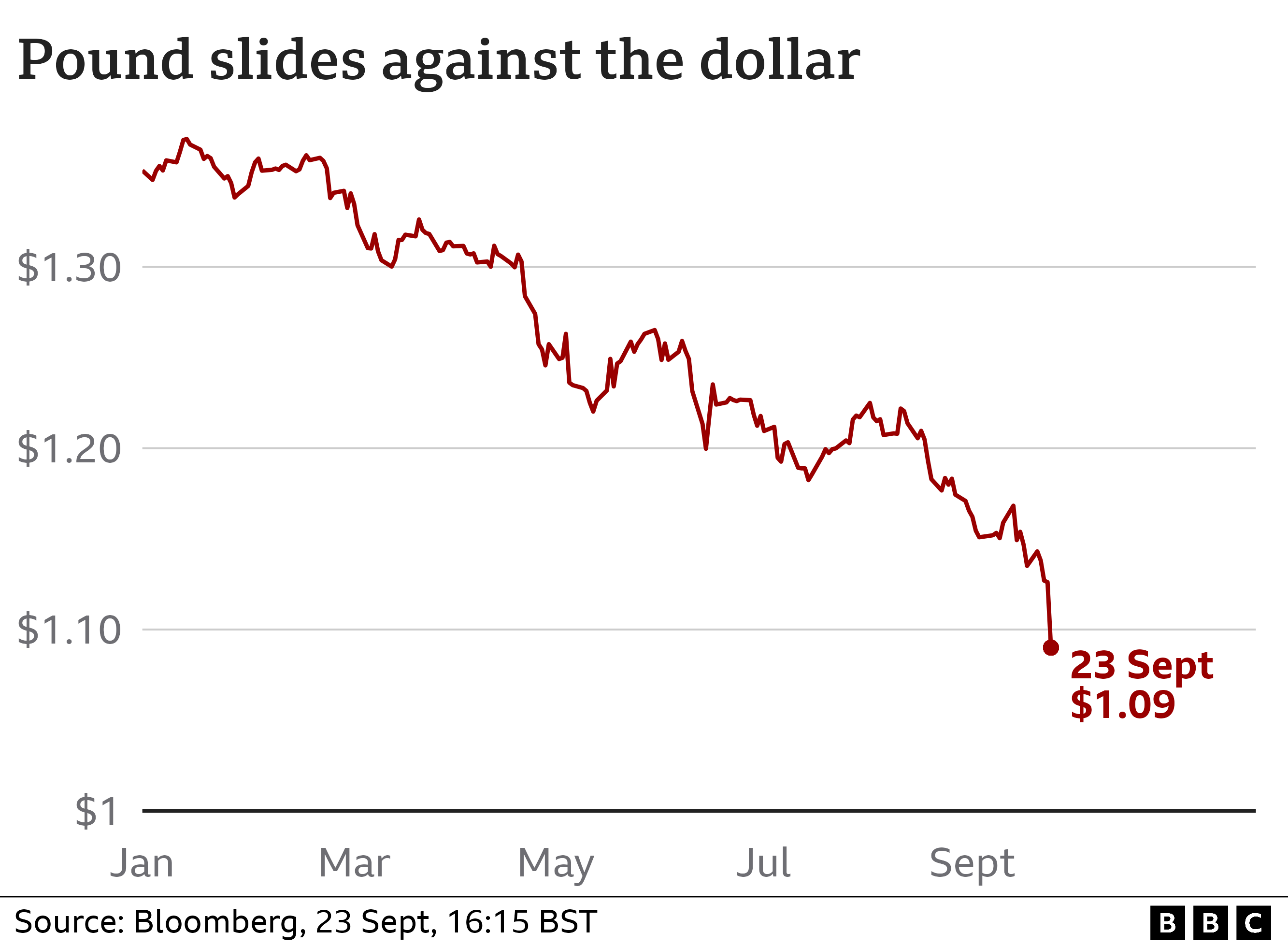
The pound has fallen to a fresh 37-year low against the dollar as financial markets reacted to the biggest tax cutting moves in 50 years.
UK stocks also dropped after Kwasi Kwarteng outlined a series of tax cuts and economic measures in a massive shake-up of the country’s finances.
The pound fell more than 2% against the dollar, dropping below $1.10.
Sterling has fallen recently owing to worries about the economy and also partly due to a stronger US dollar.
The pound also fell more than 1% against the euro on Friday, dropping to €1.13.
Meanwhile, the UK’s FTSE 100 index of major shares fell more than 2%, dropping to its lowest level for more than two months.
City analysts have been increasing their expectations of earlier and higher interest rates after the government announced a £45bn tax giveaway, leading some to conclude that inflation will remain high for some time.
According to Bloomberg data, analysts expect UK interest rates to hit 5.2% in August 2023, with expectations rising that there could be a one percentage point interest rate hike at the Bank of England’s next meeting in November.
On Thursday, the Bank increased UK rates by half a percentage point to 2.25%.
The cost of government borrowing soared on Friday, rising by near-record amounts as investors reacted to the huge tax cuts outlined by new chancellor Kwasi Kwarteng. Analysts said these would reduce government income at the same time that it is providing huge financial support to limit energy bill rises for households and firms.
What the mini-budget means for you
Why has the value of the pound tumbled?
UK may already be in recession – Bank of England
Jane Foley, a currency strategist at Rabobank, said the sell-off showed investors have doubts about the government’s plans.
“They’re worried that some of these tax cuts that have been announced aren’t going to be fully funded. That will result in a large amount of debt at a time when the Bank of England is going to be selling some of its holdings of UK government debt,” she said.
“I think this government does need to provide a lot more reassurance that it does have fiscal sensibility in order. This is not the message that’s come across this morning.”