North Korean leader Kim Jong Un has urged women in the country to have more children, state-run news agency KCNA reported on Monday.
“Stopping the decline in birth rates and providing good child care and education are all the family affairs that we should solve together with our mothers,” Kim said during an address to the attendees of the National Mothers Meeting.
Low birth rates could dampen economic outlook
South Korea has estimated that North Korea’s birth rates have been on the decline over the past decade. The United Nations Population Fund says that North Korea’s fertility rate is 1.8 births per woman as of 2023, below the 2.1 replacement rate benchmark in developed countries.
North Korea is heavily reliant on physical labour to keep its economy afloat amid isolated trade ties with the West due to sanctions.
The country is believed to have seen a decrease in fertility in the 1990s due to famine, with the South Korean Hyundai Research Institute in August saying the low birth rates could ultimately hamper the North’s manufacturing sector. UN High Commissioner for Human Rights Volker Türk said in August that many North Koreans “appear to be facing extreme hunger.”

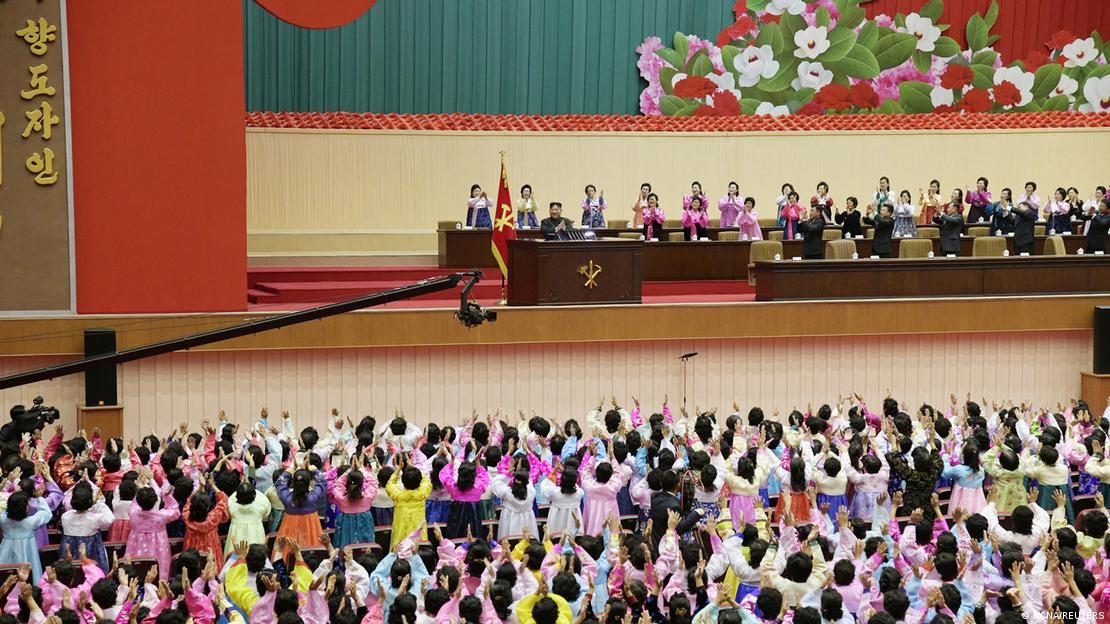
In his speech, Kim Jong Un expressed gratitude to moms in North Korea for boosting national morale.
“I too always think about mothers when I have a hard time dealing with the party and the state’s work,” Kim said while referencing the ruling Workers’ Party of Korea.
South Korea also dealing with fertility challenges
South Korea is also facing a fertility crisis, albeit for different reasons than its estranged socialist neighbour to the north. South Korea recorded 0.78 births per woman in 2022, the lowest in the world.
Poor labour market conditions for young people, lack of affordable housing in big cities like Seoul and long working hours are reasons for the low fertility rate. Moreover, women who take time off to raise kids face stigma in the office sometimes due to South Korea’s hypercompetitive, conservative culture.
South Korean President Yoon Suk Yeol earlier this year labelled the country’s low birthrate problem a “crucial national agenda.” South Korea in recent years has paid families with newborns a monthly allowance, but it’s unclear if this policy will have any long-term impact on national fertility.