Ghana needs to construct a minimum of 944,000 household toilets to bridge the country’s sanitation gap and achieve the sanitation targets under Goal 6 of the Sustainable Development Goals (SDGs) on sanitation, an official said on Friday.
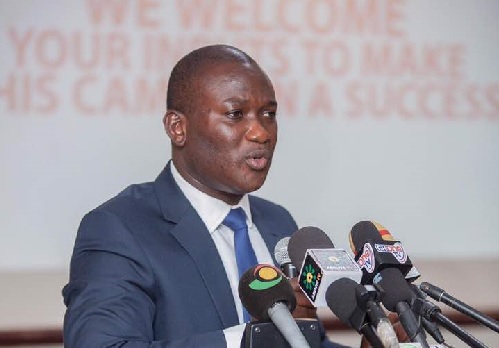
George Asiedu, the project coordinator of Ghana’s Sanitation and Water Project (SWP), said during the annual review of the World Bank-funded project that there is a gap in the annual deliveries in the sector, “and we must bridge that gap for Ghana to move toward achieving the SDG target.”
He said the SWP, which supports low-income households in the Greater Accra Metropolitan Area (GAMA) in the capital of Accra and the Greater Kumasi Metropolitan Area (GKMA) in the second largest city of Kumasi with subsidized toilets, constructs about 15,000 such toilets annually.
“Even when we add what other sister organizations also provide annually, we are still far below the annual demand; we need to find the resources to bridge this gap to achieve the SDGs,” the project coordinator said.
“There is the need to scale up the GAMA and GKMA projects nationwide to bridge the existing gaps in all the other regions to end open defecation nationwide and achieve the SDG on sanitation on schedule,” Asiedu added.
Between 2015 and 2020, the World Bank supported Ghana with a grant of 150 million U.S. dollars for the provision of subsidized household and institutional toilets in low-income communities within GAMA, in response to the severe cholera outbreak from 2014 to early 2015.
In 2020, the World Bank provided additional financing of 125 million dollars for Ghana’s SWP to build 30,000 household and institutional toilets.