Ghana needs $43 billion annually to be able to achieve her Sustainable Development Goals (SDGs).
Though the country’s development partners provided 40 per cent of that amount internally, revenue mobilisation had been a challenge to add up to help her achieve the set SDGs.
The SDGs are the blueprint agreed on by the United Nations member countries to achieve a better and more sustainable future for all.
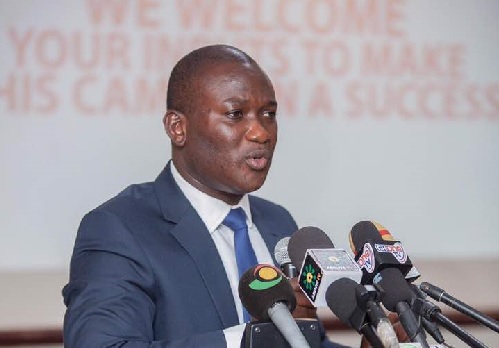
Acting Director of the Development Coordination Division of National Development Planning Commission (NDPC), Dr Winfred Nelson, said in view of the situation, achieving the SDGs by the year 2030 would not be easy, if the government did not consider other areas of mobilising revenue.
Dr Nelson was addressing the 12th International Applied Research and Innovation Conference/Fair at the Koforidua Technical University (KTU) in the Eastern Region yesterday.
The gathering brought together students from the Koforidua, Accra, Sunyani technical universities as well as students from some South African and Kenyan universities.
The event, held on the theme: “Achieving the Sustainable Development Goals (SDGs) in the Post COVID-19 Era: The Role of Research Innovation and Technology Transfer,” witnessed an exhibition of research works of some students of the KTU.
SDGs
The SDGs, also known as the Global Goals, were adopted in 2015 as a universal call to action to end poverty, protect the planet, and ensure that by 2030, all people enjoy peace and prosperity.
The 17 SDGs are integrated—they recognise that action in one area will affect outcomes in others, and that development must balance social, economic and environmental sustainability.
Countries have committed to prioritise progress for those who are furthest behind.
The SDGs are designed to end poverty, hunger, AIDS and discrimination against women and girls.
They recognise that ending poverty and other deprivations must go hand in hand with strategies that improve health and education, reduce inequality and spur economic growth while tackling climate change and working to preserve the world’s oceans and forests.
Every year, the UN Secretary General presents an annual SDG progress report, which is developed in cooperation with the UN System, and based on the global indicator framework and data produced by national statistical systems.
Ghana’s progress report
Per Ghana’s 2022 Voluntary National Review (VNR) report on the Implementation of the 2030 Agenda for SDGs as submitted to the UN, the progress of implementation has been mixed.
Gender parity and high completion rates have been sustained at the KG, primary and junior high levels despite the pandemic, while the participation of the population in formal and informal education, and training has gone up.