Immigration played a big part in Sunday’s election, but the AfD also wants to stop weapons supplies to Ukraine, as does a new party heading for third place in both states, left-wing populist leader Sahra Wagenknecht BSW party.
Although she has similar ideas to the AfD on Ukraine, Ms Wagenknecht has refused to take part in any coalition with the party, which gives the far right little chance of running Thuringia.
If the projections are confirmed, the AfD is on course to win 31 seats in the 88-seat Thuringia state parliament, and the CDU 23 seats, with only one of the three parties in the national government represented.
That would give the far-right party more than a third of the seats, handing it a blocking minority on decisions that require a two-thirds majority, including changes to the state constitution.
Chancellor Olaf Scholz’s Social Democratic Party (SPD) is set to win just six seats, with none for the Greens and liberal FDP.
Sunday’s elections have underlined the unpopularity of Germany’s ruling “traffic-light” coalition, so named because of the red, yellow and green of the party colours.
A third eastern state, Brandenburg, is due to vote in three weeks’ time and although the AfD is ahead in the opinion polls, the Social Democrats and conservatives are only a few points behind.
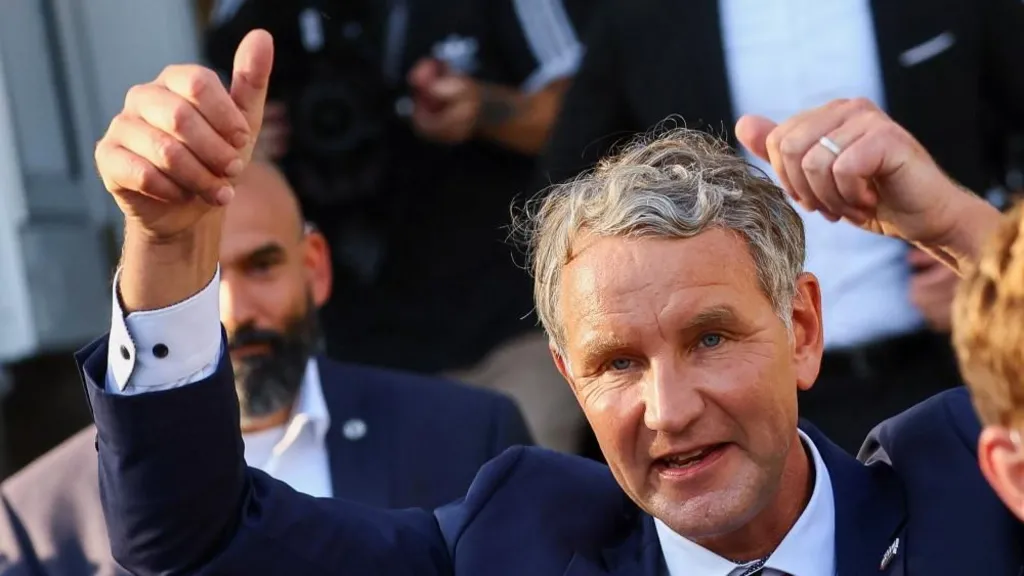
While Björn Höcke hailed his party’s victory with supporters in Erfurt, anti-AfD protesters gathered outside the Thuringia state parliament.
Among them was Hannah, a local student, who said she was very worried by the result: “I think there a lot of people who are aware they have Nazi policies and don’t care. Germany has some kind of responsibility on that matter.”
The rise of Sahra Wagenknecht’s populist party had a direct impact on the Left party, which won the last election in Thuringia but has now slipped into fourth place.
Bodo Ramelow. the Left-party state premier of Thuringia, said the election campaign had been characterised by fear and that he was “fighting against the normalisation of fascism.”