Angela Merkel’s anointed successor has refused to give up, but projected election results look increasingly bleak for German conservatives after a nail-biting race with the centre left.
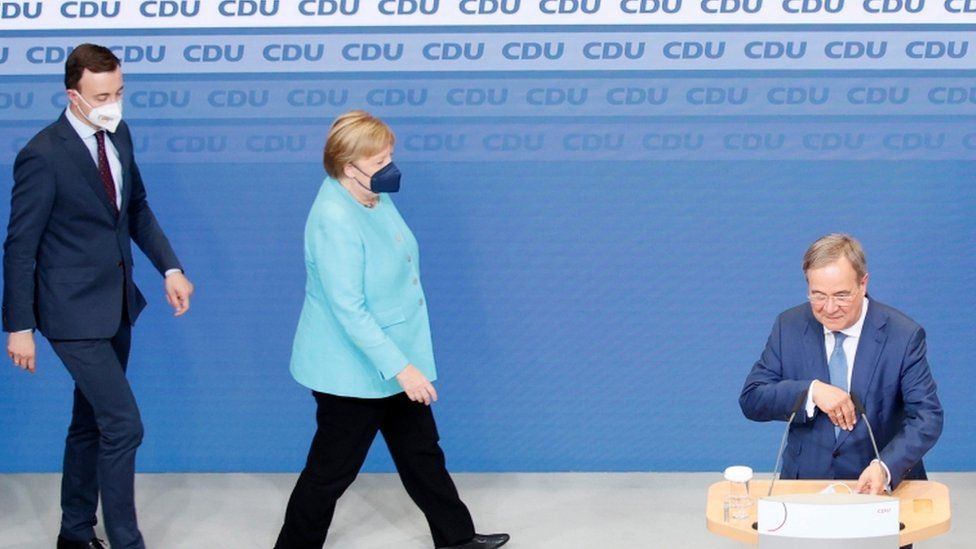
Armin Laschet is vowing to form a government, despite presiding over the CDU’s worst performance in history.
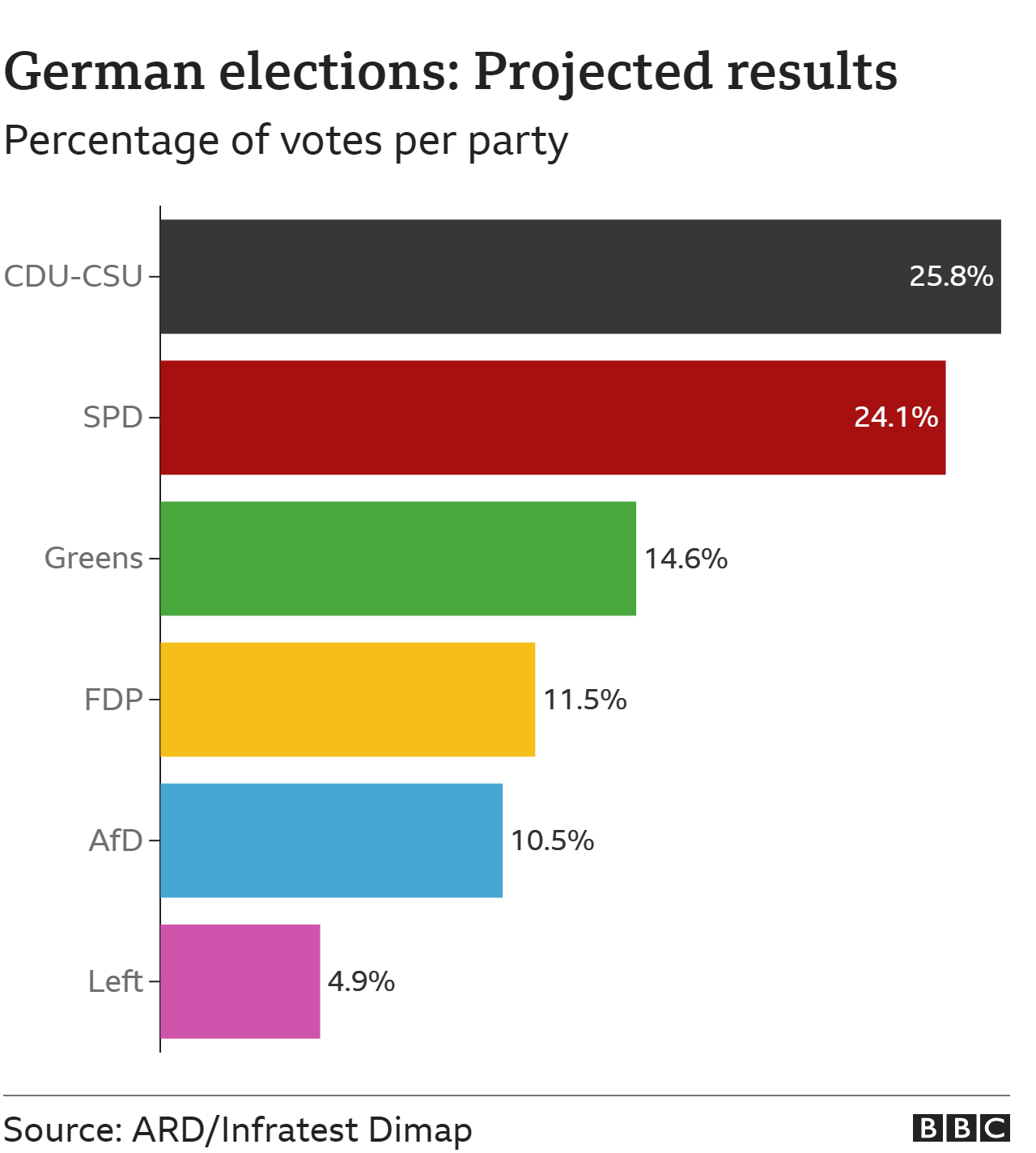
The results are not yet final and the margin is small, but the centre-left SPD could be closing in on victory.
SPD leader Olaf Scholz said his party had a clear mandate to rule.
Exit polls predicted a dead heat, but this election has been unpredictable from start to finish and the result was never going to be the end of the story. For one thing, the outgoing chancellor is going nowhere until a coalition is formed – and that may have to wait until Christmas.
Her successor’s task is to lead Europe’s foremost economy over the next four years, with climate change at the top of voters’ agenda.
Mr Scholz’s SPD supporters greeted him in raptures, but it was only later when his party edged into the lead that he told a televised audience the voters had given him the task of forming a “good, pragmatic government for Germany”.
His conservative rival hit back, arguing it was about forging a coalition, not about getting “an arithmetic majority”. Winner doesn’t take all, in other words.
“Two maybe-chancellors and two kingmakers” was one of the headlines summing up Sunday night’s rather scrappy result, but that is what it looked like.
Because it’s not just the Social Democrat and conservative leaders fighting for power. The two kingmakers are the Greens and the liberal, pro-business FDP, and they are open to offers.
Although neither the liberals of the Greens excelled, together they make up a quarter of the vote and would carry both of the big parties over the line.
They are more popular with voters under 30 than any of the main parties, but it would take some skill to bring them under the same roof.
Greens leader Annalena Baerbock wants to loosen Germany’s debt brake that stops a big jump in public debt. FDP leader Christian Lindner has little time for her party’s “ideas of tax hikes, of softening the debt brake”.
We wanted more. We didn’t manage that, partly because of mistakes at the start of the campaign – mistakes I made

So of all the possible coalitions, the Greens and the liberals feature in the two that are most likely to form.
One is the so-called traffic-light coalition, made up of the parties’ colours – red (SPD), yellow (FDP) and the Greens – or there’s the Jamaica alternative, black (CDU), yellow (FDP) and the Greens.
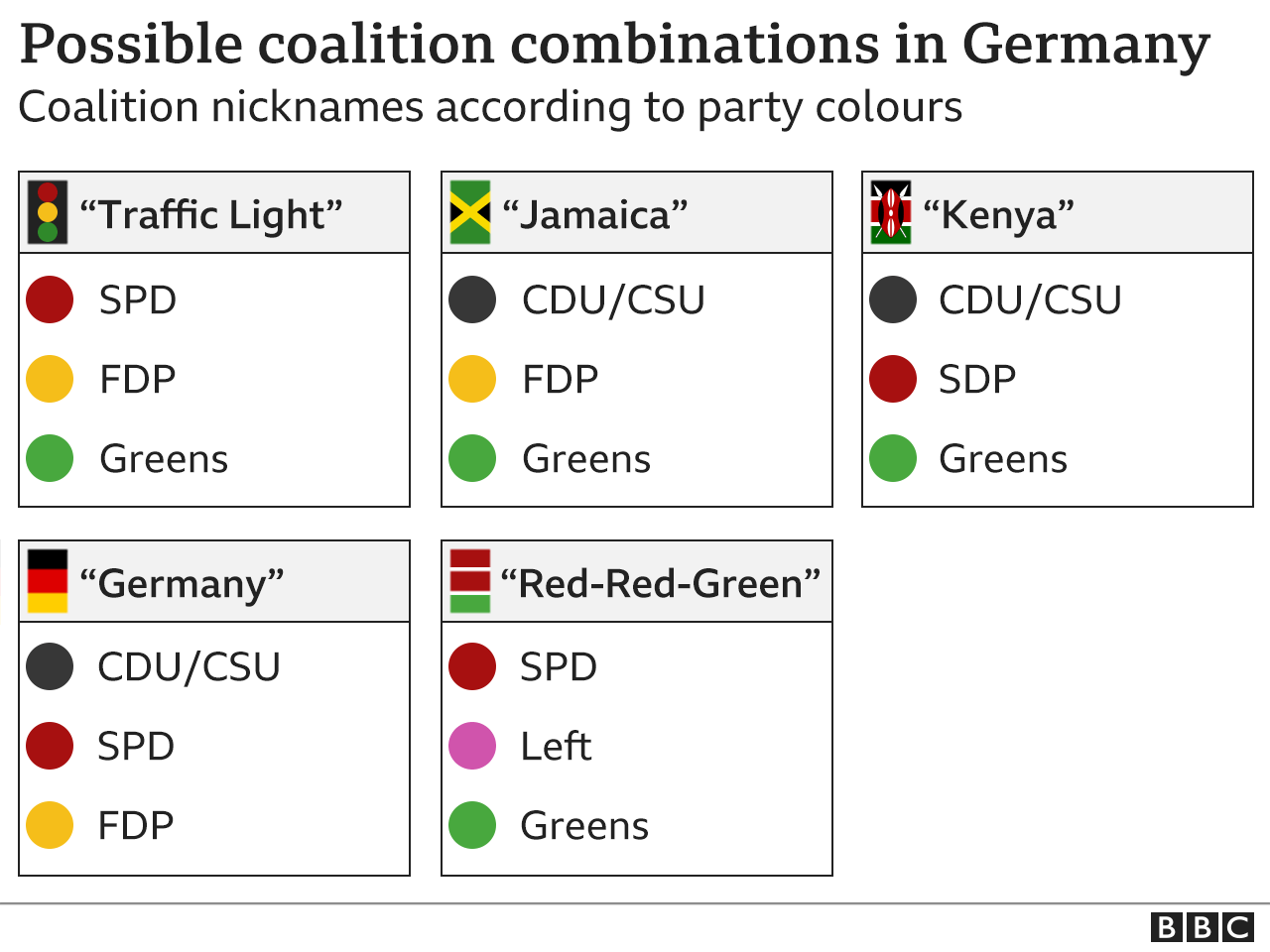
It is the first time that Germany is facing a three-way coalition, but this country has entered a new political era and the talking is yet to begin.
Beyond the four mainstream parties, it was a bad night for the radical left and a patchy night for the far right.
Left-wing Die Linke could even fall out of parliament if its final vote falls below the 5% threshold.
And although the far-right AfD’s share of the vote appears to have slipped nationally, it’s set be the largest party in the eastern states of Saxony and Thuringia.