Nigeria says it wants primary school teachers to conduct lessons in local languages instead of English, which is currently used. But how practical is that in a country where more than 600 different tongues are spoken?
Kareem Abiodun Habeebullah, whose mother tongue is Yoruba, was just a secondary school student when he was whipped in class for not speaking in English.
“When I was growing up, I was struggling to speak English,” he tells the BBC. “There was a particular class,” he says, recalling the incident in 2010. The teacher called him up to answer a question, and he was stumped.
“I know the answer but I can only respond with my mother language,” he remembers saying.
The teacher replied “no way”, came to where he stood, and then the beating began. Corporal punishment is still common in some Nigerian schools, although moves have been made to eradicate it.
“She gave me one stroke of [the] cane,” and sternly reminded Mr Habeebullah that he was not allowed to speak Yoruba in class, he says.
His was not an isolated incident he says, and other students at his school received harsh reprimands for daring to speak in Yoruba instead of English.
More than 60 years after independence from Britain, English remains Nigeria’s official language, and is used in public settings such as schools, universities, government and many work places.
But the political tide appears to be turning. In November, Education Minister Adamu Adamu announced the National Language Policy which stipulates that the first six years of primary education should be taught in the children’s mother tongue.
He said the changes were necessary because pupils learn better when they are taught in “their own mother tongue.”
Currently, primary school children are taught in English, with teachers in certain communities mixing local languages with English for ease of comprehension.
However, it is unclear how the new policy will be rolled out because – in a country where government estimates say 625 different languages are spoken, and with people moving around the country – many Nigerian children live in areas where their mother tongue is not the dominant local language.
Teaching in the mother tongue was in fact first put forward as a national policy in the 1970s, but because of difficulties rolling it out in such a linguistically diverse country, it was never put into effect, as the government wishes to do now.
The policy is already facing stiff opposition. Despite his own experience, Mr Habeebullah, who is now a school teacher, does not think teaching in local languages is a good idea.
“If you were to take a look at Nigeria as a country, we have more than 500 languages, which will make it very hard” to implement.
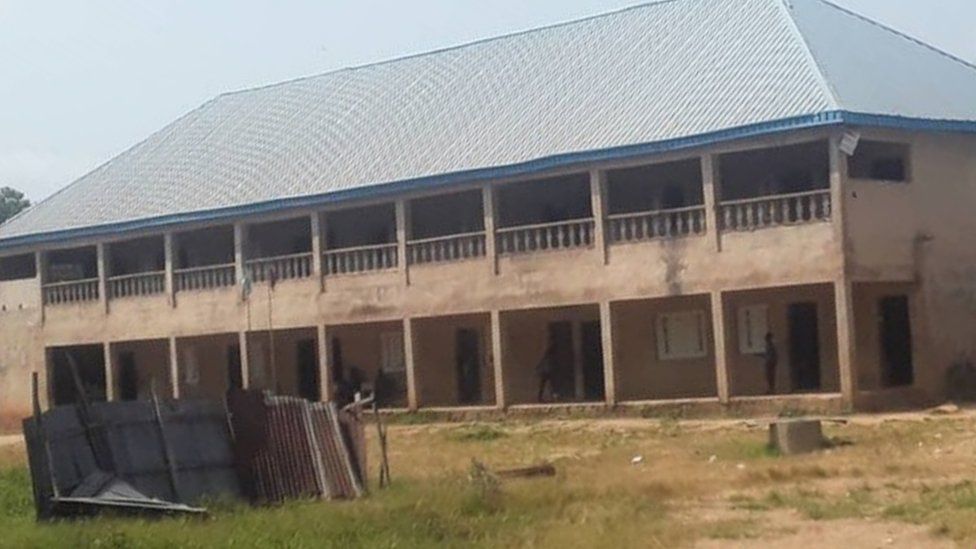
He questions how classes could be taught properly in a local language when it may contain students who speak different tongues at home. In his own class in Sabongidda-Ora, in the southern Edo State, five different languages are spoken, he says – Igbo, Yoruba, Hausa, Ora and Esan.
Although he is supposed to teach in English, there are times when he has to explain things in Pidgin English, so all the pupils can understand.
“There’s no point in teaching them something they cannot decipher, it would be very wrong.”
However, “I can’t be teaching students in their local language” he insists, because he simply does not know how to speak all the various tongues spoken by his students.
Furthermore, if they don’t speak English in primary school, they will find it difficult later on, he adds.