
You want to step out of the world of wage slavery, and set up a business of your own? Preferably a business that will be more than a mere lifestyle for you – one that you can sell and from which you can retire on the proceeds?
Well, in thinking about your chances of success, it helps to look at those who have trodden that path and ended up with a flourishing enterprise to their name.
In the interview series The Decisions That Made Me a Leader, we spoke to half a dozen successful entrepreneurs – too small a sample from which to draw statistically useful generalisations, but large enough to spot some interesting patterns.
I was struck by three intriguing attributes that may not guarantee business success, but which do seem to help.
First, I noticed the degree of rebelliousness exuded by several of them. They never quite fitted in – perhaps not into school, or university, or into the first jobs they tried.
Duncan Bannatyne, famous as one of the original big stars of the Dragons Den TV series, certainly never fitted into the navy, from which he was court-martialed and dishonourably discharged after getting into a fight with an officer. “I just thought it was right thing to do – he was poking me and shouting at me,” recalls Mr Bannatyne.
His attitude, he tells me, is that “authority should not be accepted”.
Simon Beckerman, founder of online marketplace Depop, draws a similar conclusion about himself. “I’m quite a disobedient person in my own right,” he says. “I think I am unemployable.”
And it’s true that when you don’t find it easy to work for anyone else, going it alone is the obvious alternative career route.
Before she created the tea mixology brand Bird & Blend Tea Co., Krisi Smith had stumbled through many jobs – including cleaning out cat pens in a cattery (even though she is allergic to cats) and working as a “shot girl” selling spirits to club-goers.
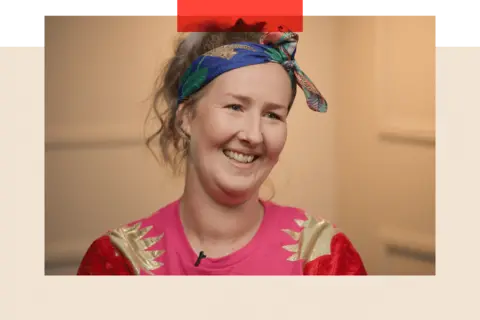
“I was always asking questions and wanting to know why we were doing something and making suggestions,” she recalls. “And I think that that tended to put people’s back up.” After seeing her employers treat staff and customers badly, she decided she wanted to operate her own business ethically.
The second attribute that I noticed was a kind of impatience hard-wired into their personalities. It seems there is always an itch. They never stand still.
But if you thought their success in business came out of some kind of life-plan upon about which they had reflected and consciously embarked, you would be missing the point.
Our entrepreneurs grabbed at opportunities, and indeed grabbed opportunities to make opportunities for themselves.
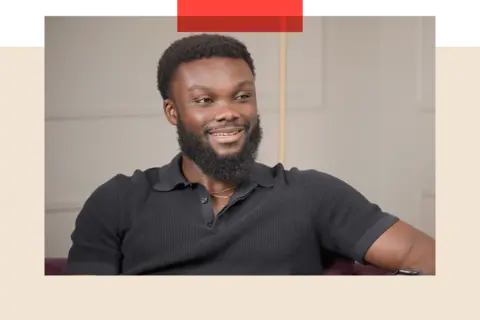
Timo Armoo, who set up the social media marketing company FanBytes, says he started his first venture at school, charging other pupils to help them with their maths assignments. Then, at the age of 17, he managed to secure interviews with Sir Richard Branson, Lord Sugar and James Caan after emailing the organisers of a business summit and offering to set out chairs in exchange for a press pass.
“I sent it and within 20 minutes I get back an email saying, ‘You’re crazy and yes, let’s do it,’” recalls Mr Armoo.
The impatience that one can observe even extends to the entrepreneurs leaving the very businesses they created. Self-aware founders understand the skills they have and do not have, and know that when a business matures, it often needs a management that can do the painstaking work of delivering sustainable growth, rather than one with the flair of creation and discovery.
At that point, impatience is exactly the wrong attribute. And anyway, our entrepreneurs, being impatient, are ready to move on once the business is solid, so their minds wander to selling and moving on.
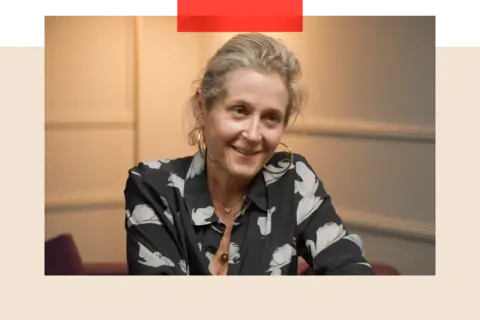
Take Martha Lane Fox, co-founder of Lastminute.com at the height of the dot-com boom during the late 1990s. She was a poster child of a new youthful entrepreneurial culture that sprung up at that time, as kids showed the grown-ups exactly what the internet was capable of.
But at the age of 31, she made the decision to step down as managing director of the company. “It was like being in a pop band where you had this one mega hit, and I didn’t want that to be the only thing that defined my life,” she says.
So to a third and final entrepreneurial attribute, which follows from the others: it’s a willingness to actually do things, rather than merely think about them. Or overthink them.
I feel this is what marks out those people – in business or perhaps even in charities or public service – that are of a genuine entrepreneurial spirit. They are the people who seem to get things done.
Personally, I think some of it comes down to a kind of optimism. They believe that their own actions have a good chance of achieving something, so they are less likely than most of us to descend into a fatalistic stupor. It gets them out of bed in the morning.
Richard Walker comes from a family with a track record in business – his father was the founder of the supermarket chain Iceland, where Richard is now executive chairman. But as a young qualified chartered surveyor, Richard says, “I also had this entrepreneurial itch to do my own thing.”
He was advised by the legendary property developer Tony Gallagher to move to Poland: “So I did, because they just joined the EU. They were the size of Germany, 40 million people, very well-educated, but it was very uncovered. There were no no Brits living out there full time running a private property company. So I decided I would.”