The Abossey Okai Spare Parts Dealers Association has warned that it will close all foreign-owned retail shops within the enclave on Monday, September 8, 2025, unless immediate government intervention is made.
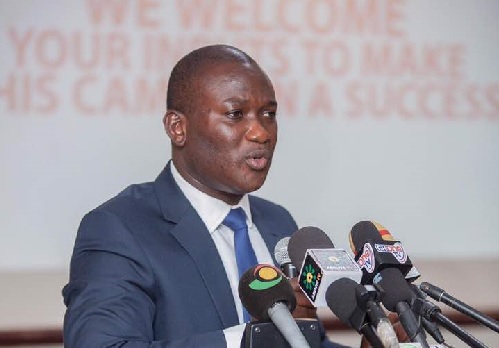
Speaking in an interview on Friday, the Association’s Director of Communications, Takyi Addo, confirmed the planned action, citing the need to uphold the Ghana Investment Promotion Centre (GIPC) Act, 2013 (Act 865), which reserves the retail trade sector exclusively for Ghanaian citizens.
“This is not a targeted action against any nationality, we are simply demanding that the laws of Ghana be respected and enforced. The retail space is legally reserved for Ghanaians, and yet foreign nationals continue to dominate it with little consequence,” Mr Addo stated.
According to him, many foreign retailers, particularly some Chinese nationals, bypass legal requirements by engaging in direct retail without meeting the minimum investment threshold of $1 million, or by posing as suppliers while operating retail outlets.
“The law is clear for foreign investors in retail must either invest $1 million or import goods of that value, and operate at a wholesale or supply level not as direct retailers. Yet many are in open violation,” he noted.
Mr. Addo argued that this illegal activity creates unfair competition for Ghanaian traders, who are burdened with high rent, taxes, and import duties.
He added that years of inaction have led to local businesses being edged out of the market.
“We’ve exercised patience for far too long. On Monday, we are taking matters into our own hands. If the authorities won’t act, we will,” he said firmly.
The Association insists that the crackdown is long overdue, pointing out that many local spare parts dealers have been forced to shut down due to what they describe as “predatory pricing” and disregard for trade laws by foreign operators.
This issue is not new.
The enforcement of Act 865 has sparked repeated tensions in the past, especially between local traders and foreign nationals, most notably Chinese and Nigerian retailers.
Similar disputes in 2020 and 2021 led to widespread shop closures, demonstrations, and renewed calls for stricter enforcement of investment laws.
Despite multiple promises by successive governments to address the situation, local traders say the enforcement remains inconsistent, leaving Ghanaian businesses increasingly vulnerable in their own markets.