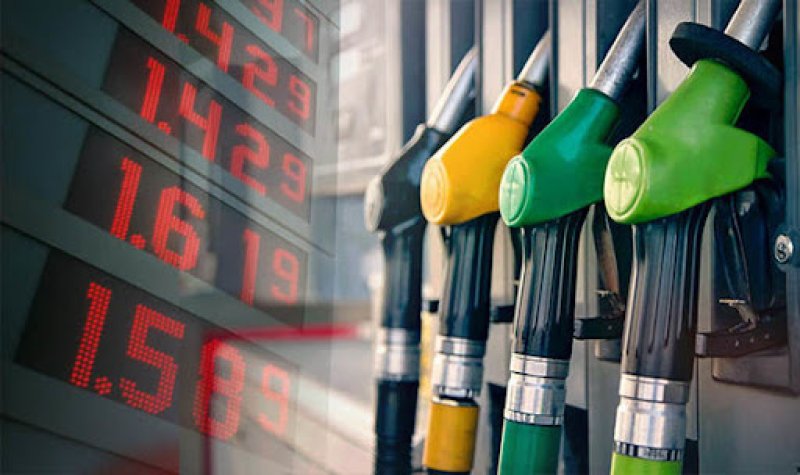
Oil Marketing Companies (OMCs) across Ghana have reduced the prices of petroleum products at the pumps, aligning with earlier projections for the first pricing window of June 2025.
The reductions, which took effect on June 1, 2025, will remain in place for the next two weeks.
Star Oil, a market leader, has slashed the price of petrol from GH¢12.99 to GH¢11.77 per litre, while the price of diesel has dropped from GH¢13.99 to GH¢12.49.
GOIL, another major player in the industry, is now selling petrol at GH¢12.52, down from GH¢13.27, with diesel also reduced to GH¢12.98 from its previous price of GH¢13.27.
Allied Oil led the price adjustments last week, offering petrol at GH¢12.15 per litre and diesel at GH¢13.35.
Several other OMCs have confirmed that they will revise their pump prices from Monday, June 2, 2025, in response to prevailing market conditions.
However, some industry analysts have questioned the scale of the reductions, arguing that OMCs could have passed on even greater savings to consumers.
According to the Chamber of Oil Marketing Companies, the primary driver behind the latest price cuts is the significant appreciation of the Ghanaian cedi against the US dollar.
In the latter half of May 2025, the cedi strengthened from GH¢13.99 to GH¢12.15 per dollar, representing a robust gain of approximately 13.11%. This has helped lower the cost of importing crude oil and refined petroleum products.
Although global crude oil prices have seen marginal increases recently, the strength of the cedi has more than offset those changes.
The Chamber’s report also notes that Brent crude prices have been gradually recovering after falling to just over $60 per barrel in April 2024, due to rising U.S. tariffs and increased OPEC+ output.
Market sentiment has since improved, buoyed by the U.S.-UK trade agreement and a temporary 90-day accord with China, helping to stabilise Brent crude around $64 per barrel.
Looking ahead, the U.S. Energy Information Administration (EIA) forecasts that Brent crude could average $65.85 in 2025, before falling to $59.24 in 2026 as global production is expected to outpace demand.