
After months of painful price hikes that stretched household budgets and emptied wallets, Ghana’s inflation rate has finally cooled, dropping to 8.0% in October 2025, its lowest level in more than a decade.
It’s a refreshing change for a country that once endured inflation as high as 54.1% in December 2022.
But while the numbers look good on paper, many Ghanaians are still asking: If inflation is falling, why do prices still feel high?
Steady Progress: From 54% to 8%
Data from the Ghana Statistical Service (GSS) shows inflation has been falling for ten straight months:
-
23.5% in January 2025
-
11.5% in August
-
9.4% in September
-
Now 8.0% in October
The improvement is largely due to a stronger cedi, lower fuel prices, and better food supply across the country.
-
Food inflation dropped to 9.5% in October, down from 11.0% in September.
-
Non-food inflation also eased to 6.9%, compared to 8.2% last month.
-
Prices of locally produced goods fell from 10.1% to 8.0%, signaling improved price stability.
The cedi calms down, but critics raise eyebrows
After years of volatility, the cedi has been relatively stable, helping reduce import costs and fuel prices. But some analysts think the calm might be too good to be true.
Kwadwo Poku, Executive Director of the Institute for Energy Policies and Research (INSTEPR), believes the Bank of Ghana is artificially controlling the exchange rate to project stability.
“For me, the cost of what the Bank of Ghana and the Ministry of Finance are incurring is huge because we already have a $21 billion hole in the budget due to this currency situation,” he said.
He warns that maintaining the cedi below its real market value, estimated between ₵12.40 and ₵12.50 per dollar, could worsen Ghana’s fiscal deficit and hurt revenue collection at the ports.
“Since the FX value is being kept low, it’s also affecting the GRA’s ability to meet its targets,” he added.
And with winter approaching, global fuel prices may rise again, putting fresh pressure on the cedi and consumer prices.
In the Markets
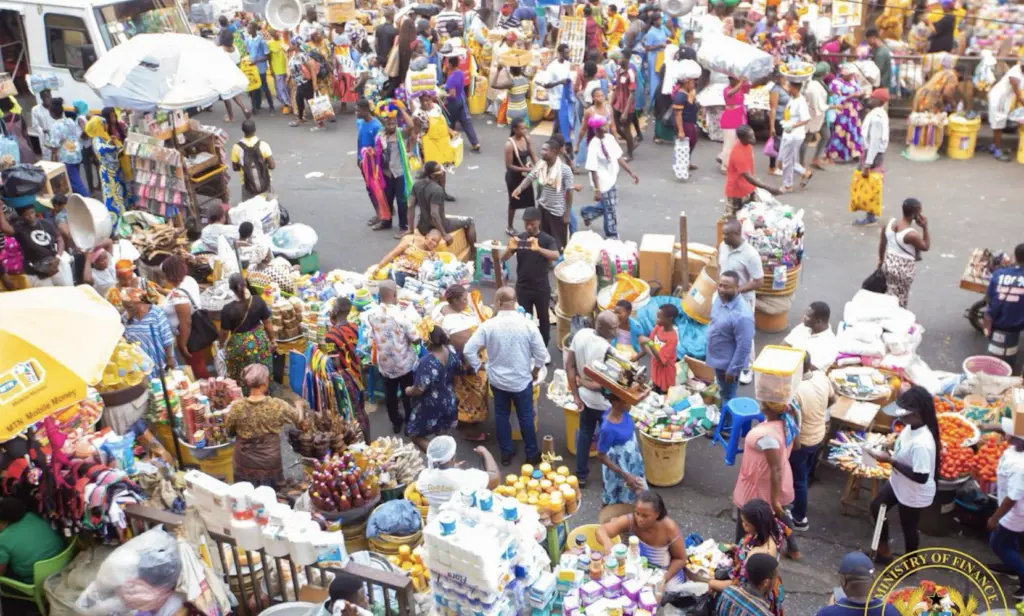
On paper, Ghana’s inflation looks calm. But in the markets, it’s a different story.
At Makola Market, a trader selling onions puts it simply, “We hear inflation is down, but our prices haven’t changed. Things are still expensive.”
The same sentiment echoes across Kejetia, Kotokuraba, and Techiman — people admit things aren’t getting worse, but they’re not getting cheaper either.
Ato Forson’s economic balancing act
Under Finance Minister Dr. Cassiel Ato Forson, the government has managed to slow inflation while stabilising the currency.
Still, some critics wonder if Ato Forson is “forcing” inflation down or “falsing” the numbers, a tongue-in-cheek jab that captures the nation’s cautious mood.
But one thing is clear, inflation is dropping.
The next big hurdle, however, is interest rates. Businesses continue to face high lending costs, limiting investment and job growth. As one SME owner said.
“A cooling inflation that doesn’t bring down loan rates is like rain clouds that never pour.”
Cautious Christmas cheer
With Christmas less than two months away, markets are waking up again. Traders are restocking, shoppers are budgeting tightly, and importers are breathing easier thanks to the stable cedi.
Still, optimism is mixed with caution.
The outlook depends on fiscal discipline, stable food supply, and whether politics can resist overspending ahead of the festive season.
Bottom line
Ghana’s inflation story is finally turning a corner. From 54% to 8%, that’s real progress, but the real test is whether Ghanaians can feel it in their pockets.
For now, the numbers may be cooling, but the markets are still waiting for the prices to follow.


Thanks for sharing. I read many of your blog posts, cool, your blog is very good.