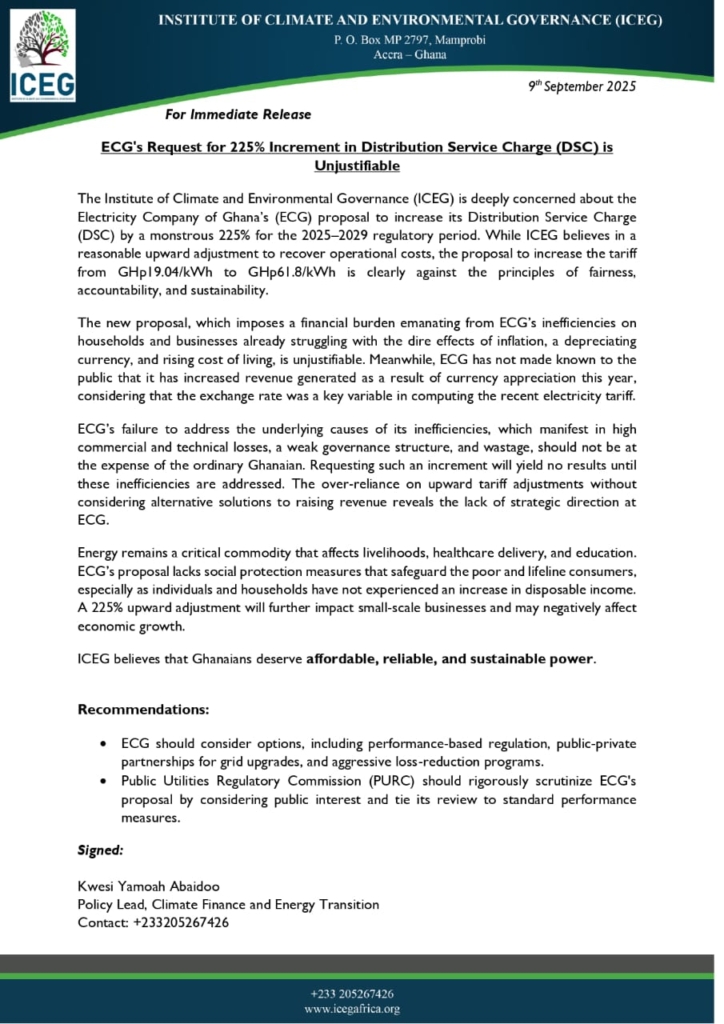
The Institute of Climate and Environmental Governance (ICEG) has strongly opposed a proposal by the Electricity Company of Ghana (ECG) to increase its Distribution Service Charge (DSC) by 225% for the 2025–2029 regulatory period.
ICEG described the proposed hike from GH₵19.04/kWh to GH₵61.8/kWh as unfair, unsustainable, and out of touch with the current economic reality.
While acknowledging the need for reasonable tariff adjustments to cover rising operational costs, ICEG argues that ECG’s request violates key principles of fairness, accountability, and long-term sustainability.
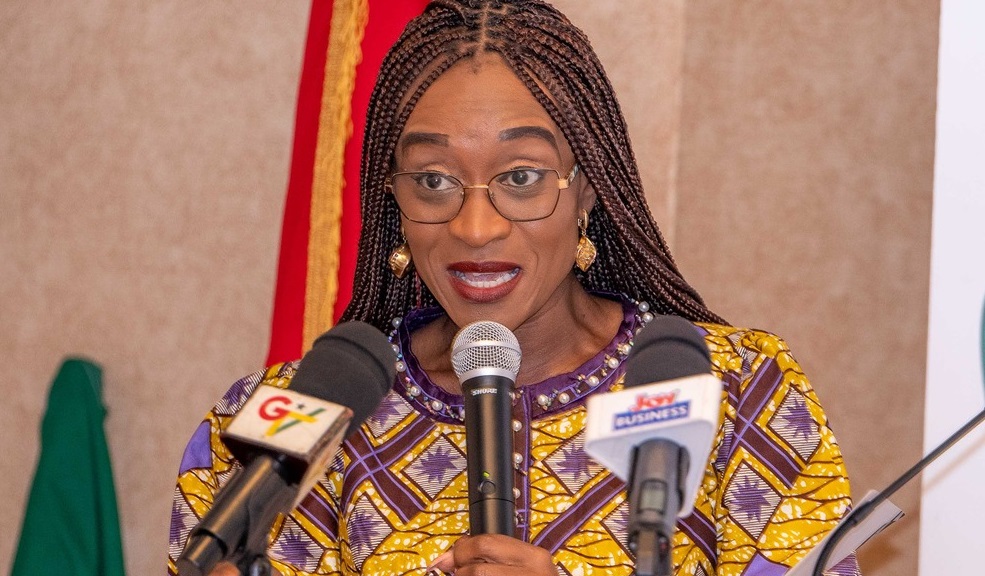
In a statement signed by Kwesi Yamoah Abaidoo, ICEG’s Policy Lead on Climate Finance and Energy Transition, the organisation warned that such a drastic increase would place an unbearable financial burden on households and businesses, especially at a time when Ghanaians are already struggling with high inflation, a weakening cedi, and rising living costs.
“This level of increase is excessive and risks worsening energy poverty,” the statement read. “Any tariff adjustment must be data-driven, equitable, and aligned with national goals for just and inclusive energy access.”
ICEG called on the Public Utilities Regulatory Commission (PURC) to thoroughly review the proposal and prioritise solutions that protect consumers while promoting a transparent and accountable utility system.
“ECG’s failure to address the underlying causes of its inefficiencies, which manifest in high commercial and technical losses, weak governance structures, and wastage, should not be at the expense of the ordinary Ghanaian,” the statement read.
ICEG further noted that ECG has not disclosed to the public the additional revenue gained from recent currency appreciation, even though the exchange rate was a key factor in determining tariffs.
The institute warned that the tariff hike could worsen economic conditions, especially for small businesses, and deepen the struggles of households that have not seen an increase in disposable income.
Below is the full statement