For over 20 years of my life, I have heard, read and witnessed incidents of journalists being assaulted for simply doing their work. Growing up, I never imagined I would one day find myself in the journalism profession. Yet, here I am, living the very reality I once observed from a distance. Perhaps the universe truly does have its own plans.
Assaults on journalists have, unfortunately, become a recurring feature in Ghana’s democratic space. These attacks do not happen because journalists are reckless or incompetent. More often than not, they happen because some individuals or groups deliberately want to stop journalists from doing their jobs. They want silence. They want control. And they want darkness where light should exist.
Many people forget that the media is not called the Fourth Estate for fancy reasons. The media holds immense power — power to expose wrongdoing, shape national discourse, demand accountability and even influence the direction of a country. When journalists are attacked, it is not just an assault on an individual; it is an attack on democracy itself.
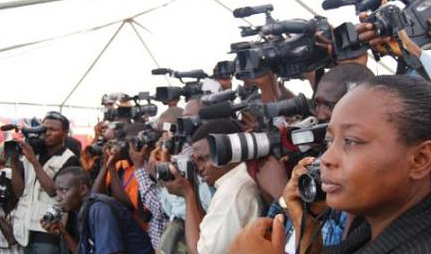
The disregard for journalists in Ghana has become deeply alarming. This is a profession already riddled with risks like physical danger, psychological stress and financial instability. Yet, despite these challenges, journalists still put their lives on the line daily to keep the public informed about what is happening in their communities, their country and the world at large.
What makes this situation even more painful is that journalism is one of the most underpaid professions in Ghana. Many journalists work long hours for minimal compensation, often without insurance, proper safety equipment or institutional support. During elections, wars, political campaigns, fire outbreaks, crime scenes and disasters, journalists are always present. They run towards danger while others run away, all in the service of the public.
The years 2025 and 2026 alone tell a disturbing story.
In February 2025, at least five journalists were attacked by unidentified men while covering the Council of State elections in the Ashanti Region. That same year, Dakurugu Abubakar Ndeeya of Zaa Multimedia was physically assaulted and allegedly brutalised by supporters of the New Patriotic Party (NPP) while recording an incident involving a police officer in Tamale.
In July 2025, during the Ablekuma North parliamentary by-election, three journalists were assaulted while on duty:a GHOne TV reporter was slapped by a police officer, another journalist was sprayed with pepper spray, and a JoyNews reporter was attacked by a masked man at a polling station.
Also in 2025, JoyNews journalist Latif Iddrisu was allegedly assaulted by political supporters while covering developments at the Economic and Organised Crime Office (EOCO) in Accra following the arrest of a political figure. Barely days into 2026, on January 5, Class Media Group journalist Samuel Addo was reportedly attacked by personnel of the Ghana National Fire Service while covering a fire outbreak at the Kasoa New Market.
These are not isolated incidents. They are part of a growing pattern.
What did these journalists do wrong? Nothing. Absolutely nothing. They did not insult anyone. They did not provoke violence. They were simply present to report, document and inform the public. Their only “crime” was doing their job.
Journalism is not a 9-to-5 profession. Journalists wake up before dawn, return home late at night and repeat this cycle relentlessly throughout the year. While most professions have structured breaks and rest periods, even ministers take time off but journalists do not have the luxury of rest. News does not sleep. Tragedy does not wait. Democracy does not pause.
Unlike many other professions that people enter primarily for financial gain, journalism cannot be sustained without passion. You cannot survive in this field without a deep love for truth, service and public interest. Journalists are watchdogs of society. They hold power to account, give voice to the voiceless, educate, inform and entertain. Yet, they are often belittled, threatened and treated with contempt.
As a final-year journalism student, these realities break my heart. Each reported assault fills me with fear and uncertainty. I find myself asking painful questions: What will become of me? What kind of future awaits journalists like me? Will we always have to choose between our safety and our duty to the public?
It is devastating that in 2026, journalists in Ghana still face such hostility simply for doing their jobs.
I commend the President of the Ghana Journalists Association, Albert Kwabena Dwumfour, for consistently lending his voice to this fight. His advocacy matters. But advocacy alone is not enough. There is more to be done by the state, security agencies, political actors, institutions and the general public.
The public must understand one fundamental truth: a journalist’s loyalty is to the people. Journalists exist to serve society, not to fight it. Attacking journalists only weakens the very system that protects citizens’ rights and freedoms.
We need protection.
We need accountability for perpetrators.
We need enforcement of laws that safeguard press freedom.
And above all, we need to feel safe.
Because when journalists are silenced through fear and violence, society loses its voice and democracy begins to crumble.
By Sally Ama Quaicoe
Journalist with Citi FM/Channel One TV