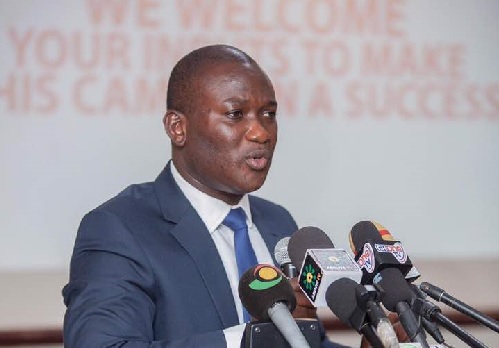
Former UN Senior Governance Advisor, Professor Kwaku Agyeman-Duah, has expressed strong reservations about proposals to lower the minimum age for presidential candidates in Ghana from 40 to 30 years.
He believes the presidency requires a level of maturity, experience, and judgement that most people at age 30 are unlikely to have developed.
He made these remarks during an interview on Saturday, December 27, 2025, as part of discussions on the ongoing constitutional review being conducted by the Constitution Review Committee (CRC).
The Chairperson of the CRC, Professor H. Kwasi Prempeh, has disclosed that the Committee is proposing an amendment to Article 62(b) of the 1992 Constitution to reduce the minimum age requirement for presidential candidates from 40 to 30 years.
However, Professor Agyeman-Duah questioned the justification for such a change, stressing that leading a country requires significant exposure, practical experience, and emotional maturity.
“Personally, I am not in favour of reducing the age from 40 to 30. I believe that at 30, many people have not yet attained the level of maturity required for such a demanding office. I say this with respect to those who may disagree,” he said.
He further argued that Ghana’s socio-economic realities make it difficult for most young people to gain sufficient leadership experience by that age.
“When you consider the Ghanaian context, particularly for those from rural backgrounds like myself, many people complete their first degree around 27 or 28. Even after obtaining a master’s degree, the question remains: what level of experience or exposure have they had to govern a country? Running a nation is very different from leading student organisations,” he explained.
Professor Agyeman-Duah also emphasised that age often brings perspective and sound judgement, which are critical for effective national leadership.
“From my own experience, I believe that at 30, one has not yet reached the level of maturity required to lead a state,” he added.
The CRC recently submitted its constitutional review report to the President as part of its mandate to assess and recommend reforms to the 1992 Constitution.
Several of its proposals, including the recommendation to lower the presidential age limit, have since generated significant public debate.