Ghana, a nation endowed with significant ecological wealth, from forest reserves of the Western and Eastern Regions to mineral-laden lands in Ashanti, now finds itself increasingly vulnerable to the destructive impacts of illegal small-scale gold mining, locally known as galamsey.
These illicit activities have infiltrated 34 out of the country’s 288 forest reserves, resulting in the degradation of over 4,726 hectares of forest cover (Institute for Security Studies, 2024).
Equally troubling is the widespread contamination of the country’s water bodies. About 60percent of Ghana’s water resources are now polluted, largely due to the unregulated use of toxic chemicals such as mercury and cyanide (Al Jazeera, 2025). If current trends persist, experts have warned that Ghana could be compelled to import potable water by 2030.
This article explores the devastating consequences of galamsey, ex amines the advocacy efforts led by the National Commission for Civic Education (NCCE), and emphasizes the urgent need for collective national action to confront and curb this growing crisis.
Galamsey
The term galamsey is a colloquial con traction of the phrase “gather them and sell,” aptly reflecting the informal and often chaotic nature of illegal small scale gold mining in Ghana. The practice has historical roots dating back to the pre-colonial and colonial eras when indigenous mining activities were largely unregulated and served as a vital source of livelihood for local communities.
Over time, especially following the discovery of substantial gold deposits in regions such as Ashanti, Western, and Central Ghana, galamsey evolved into a vast underground economy. Today, it encompasses a sprawling network of miners, many of whom are young, un employed, and driven by poverty. According to ENACT Africa (2023), over one million people are involved in small scale mining across 14 of Ghana’s 16 regions, with more than 85percent engaged in illegal operations.
In certain areas, foreign nationals, particularly from China, have collaborated with local miners, introducing advanced equipment and techniques that further intensify environmental degradation.
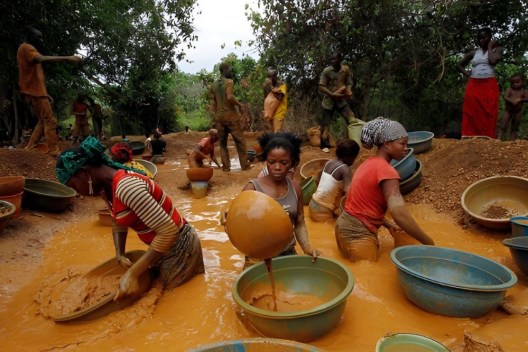
Common galamsey methods include alluvial mining in rivers and streams, open-pit mining using excavators, often abandoned after use, and underground mining, where untrained miners dig tunnels without proper engineering knowledge or safety precautions. These methods, while profitable for the perpetrators, continue to pose significant environmental and public safety risks as discussed below:
Environmental degradation
The environmental toll of galamsey in Ghana is both severe and far-reaching. One of the most alarming consequences is widespread deforestation. Illegal mining operations routinely clear vast tracts of forest without regard for conservation or sustainability.
In the past decade alone, Ghana has lost approximately 1.6 million hectares of forest cover, over half of which is directly attributed to galamsey activities (Business & Financial Times, 2024). This deforestation undermines biodiversity, fragments wild life habitats, destabilizes ecosystems, and contributes significantly to climate change by reducing the country’s car bon absorption capacity.

Equally devastating is the pollution of Ghana’s freshwater resources. Major rivers such as the Pra, Ankobra, Offin, and Birim, once lifelines for agriculture, fishing, and domestic use, have become toxic channels, heavily contaminated by mercury, cyanide, and other chemicals used in illegal gold extraction. These pollutants not only destroy aquatic life but also pose serious health risks to communities that depend on these waters for survival.
According to the Ghana Water Compa ny, more than 60percent of water bodies in mining-affected areas are now polluted beyond acceptable safety standards, forcing higher water treatment costs and, in some cases, making water unsuitable for use altogether.
In the long term, if this environmental degradation continues unabated, Ghana faces a looming crisis: the potential need to import potable water. This dire forecast underscores the urgency for immediate, coordinated action. The cost of inaction is not only ecological but existential, for the environment, for public health, and for posterity.
Public health implications
The environmental degradation driven by galamsey has profound and direct repercussions on public health, especially in communities located near mining sites. Residents in these areas are disproportionately affected by a range of health conditions, including respiratory illnesses, waterborne diseases, and heavy metal poisoning. According to the Ghana Health Service, respiratory dis ease cases in galamsey-affected regions surged to 560 per 100,000 people in 2024, more than double the rate of 215 per 100,000 recorded in non-affected areas.
Mercury contamination, in particular, presents a grave health threat. Frequently used in illegal gold extraction, mercury seeps into water bodies and soil, exposing entire communities to toxic levels. Pregnant women and children are especially vulnerable, with mercury exposure linked to severe neurological damage, developmental disorders, and long-term cognitive impairments (The Ghana Report, 2024a). Cyanide, another commonly used chemical, can also cause acute poisoning and organ dam age when consumed through contaminated water or food.
The economic burden of these health impacts is staggering. Treating the dis eases associated with galamsey-related pollution places immense strain on already stretched healthcare systems. These costs not only undermine national development but also perpetuate cycles of poverty in vulnerable communities, many of whom are already marginalized. The public health crisis induced by galamsey is a silent emergency, one that demands urgent attention and intervention from policymakers, healthcare providers, and civil society alike.
Economic Consequences While galamsey contributes an estimated US$2 billion to Ghana’s informal economy annually, the environmental and social costs far outweigh these gains (Business & Financial Times, 2024). The government loses approximately US$2 billion each year in tax revenues due to unreported gold exports (The Guardian, 2024).
The agricultural sector, particularly cocoa farming, has been adversely affect ed. Illegal mining activities have led to the destruction of over 100,000 acres of farmland, undermining Ghana’s position as a leading cocoa producer (Business & Financial Times, 2024b). In 2023, cocoa production declined by 5percent due to the encroachment of illegal mining on cocoa farms (Tawiah, 2024). This not only disrupts the livelihoods of farmers but also threatens national revenue and food security.
Social and developmental impact
The pervasive influence of galamsey extends far beyond environmental degradation, posing a significant threat to Ghana’s social fabric and long-term development. At its core, illegal mining undermines progress toward several key Sustainable Development Goals (SDGs), jeopardizing national and community-level advancement. Galamsey exacerbates poverty (SDG 1) by destroying lands, displacing farmers, and disrupting livelihoods in rural communities that depend heavily on agriculture. It also threatens food security (SDG 2) through soil degradation and contamination, making once-fertile lands unproductive.

The health implications of galamsey contribute to a violation of good health and well-being (SDG 3). Access to clean water and sanitation (SDG 6) is critically compromised as galamsey operations pollute rivers, streams, and underground water sources. Lastly, galamsey impedes efforts to combat climate change (SDG 13) due to widespread deforestation and land degradation. The unchecked spread of galamsey presents a clear and present danger to Ghana’s sustainable development ambitions. Addressing it is not just an environmental imperative, it is a social and economic necessity.
Source: Housing In Ghana Magazine
Housing in Ghana magazine is a publication under the Housing in Ghana Foundation, an organization that is committed to promoting and facilitating access to quality housing solutions across Ghana. The bi-annual magazine publication serves as a comprehensive guide for individuals, families investors as well as other key industry players seeking information on real estate trends and news, property listings and investment opportunities within the country. Email: info@housinginghana.com 0555444665 | 0599663344