Situated in the Guan District in the Oti Region, Likpe Todome is home to one of Ghana’s most intriguing eco-tourism attractions — the Likpe Ancestral Caves.
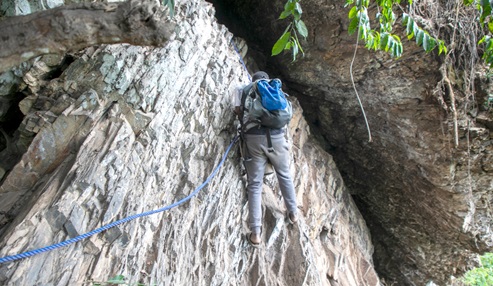
Located beneath the Likpe Mountain, one of the Akuapim Togo mountain ranges, the village acts as a gateway to the caves, which involves a climb of between 45 minutes and an hour to reach.
The caves are a hidden treasure offering a rare insight into the lives of those who once sought sanctuary within them.
The people of Likpe are Guans who migrated from Atebubu, now in the Bono East Region, to settle around Hohoe.
According to historical accounts, a conflict arose between the new settlers, being the minority group, and some old settlers, sparked by the murder of a pregnant woman from the minority group.
The refusal of the old settlers to replace the deceased with a member of their tribe provoked the minority group, who began preparing for battle by sharpening stones.
Spies reported to their people that the new settlers were sharpening (lili) stones (kpe), an action that signalled a pending conflict.
The battle was averted; however, the Likpe people felt they could no longer live in harmony with their neighbours and, therefore, took refuge in the hills.
‘Lili’ ‘kpe’,
The name “Likpe” originates from the Ewe language ‘lili’ ‘kpe’, which refers to sharpening stones to make weapons for battle.

Spying area of cave six
The Likpes lived in caves for many years until they finally emerged and established the first of ten Likpe settlements, known as “Likpe Todome”, a settlement beneath the mountain.
The Likpe Ancestral Caves consist of six interconnected chambers, each serving a unique purpose.
The journey begins with a long walk to the first cave, the Conference Chamber, where the chief, elders, and community members gather to discuss important matters and make decisions.
Following this is the adjacent Hideout Cave, used by guards to protect the community from potential threats.
From there, one descends into the third cave, which served as a sleeping chamber for community members.

Sleeping chamber
Next, the underground Palace Cave features stones arranged as seats for the chief and elders, utilised for significant gatherings and ceremonies.
Beyond the palace cave lies the Holding Cell or Prison, designated for detaining criminals and offenders.
Lastly, the Spy Cave, used by guards to watch the surroundings and spot potential enemies or invaders, offers stunning views of the landscape.
A trip to the caves is an adventure of tortuous climbing and descending cliffs and navigating through narrow entrances that sit on precipices that portend danger, especially for the acrophobic.
Curiously, visitors can explore the caves and enjoy the picturesque views of the surrounding landscape.
A visit to the nearby Wadjakli Falls is also imperative, with the journey to both places lasting for about four hours.
The Likpe Ancestral Caves are a true hidden gem, offering a unique insight into Ghana’s rich history and cultural heritage.