In Ghana, dance is a universal language that transcends mere movement.
It’s a powerful medium that expresses people’s histories, achievements, happiness, tragedy, celebrations and declarations of war or a means of communication.
Dance forms an integral part of our identity, weaving together our histories, traditions and values.
Ghana is home to a rich array of traditional dances, each with its unique history, significance and style. From the Agbadza performed by the Ewe people to the Adowa performed by the Akans (Asantes, Bonos, Akims, Akuapims and the Kwahus), each dance is a testament to the country’s rich cultural diversity.
Other notable traditional dances include Kple, performed by the Ga-Dangme; Apatampa, performed by the Fantis; Kpanlogo, performed by the Ga people; Borborbor, performed by the Ewes and Pogne Dance by the Frafra people.
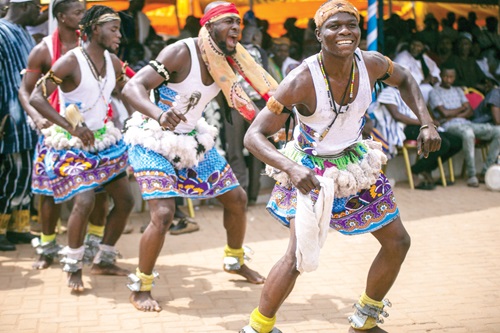
Among these vibrant dances is the Bamaya, commonly found among the Dagombas of northern Ghana.
The name “Bamaya” itself tells a story. In Dagbani, it means “the river or valley is wet,” a reference to the dance’s origins in the early 19th century.
According to oral tradition, the Dagbon State was plagued by a severe drought that destroyed crops and livestock.
Desperate for relief, the chief and his elders consulted an oracle, which instructed them to appease the gods by dressing in women’s apparel and sacrificing animals.
The story goes that the gods favoured the prayers of women over those of men, hence the unusual dress code.
As the men donned women’s clothing and made the prescribed sacrifices, the rains finally came, bringing relief to the drought-stricken land.
Overjoyed, the men danced in the muddy grounds, their movements symbolising the wet earth.
Today, Bamaya is performed not only to commemorate its historical significance but also to entertain and educate audiences at festivals and other special occasions, ensuring its legacy endures for generations to come.
The dance remains a vibrant part of the Northern Region’s cultural heritage.
Performers, dressed in vibrant robes like women, showcase their skill with rapid footwork, dynamic waist movements and energetic drumming.
The addition of beads and cymbal bells around their waists and chins adds depth to the rhythmic beat.
As the lead dancer guides the ensemble, the drummers and flute players create a beat that dictates the pace and dance movements.
Each dancer showcases their unique skills as they take turns displaying their prowess.