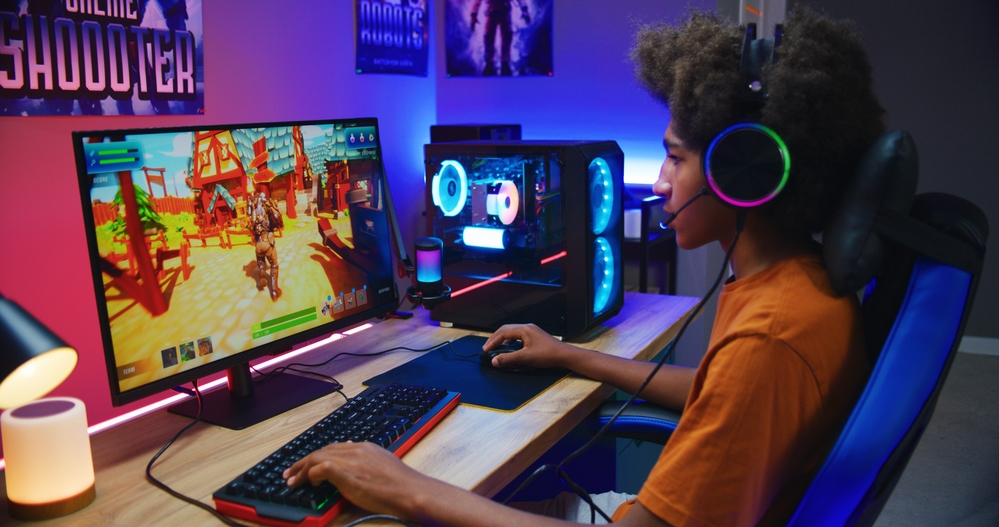
We live in a culture of escapes, distractions, and dopamine, and many become entangled. As a professor and therapist, I work with people who struggle with compulsive behaviour of many kinds.
In one of my research classes, doctoral student Jayson Carmona chose to study World of Warcraft (WoW) players. Our study, which resulted from this project—”Escaping the Escapism: A Grounded Theory of the Addiction and Recovery Process in Online Video Gaming”—analysed stories of those whose gameplay turned from fun to obsession.
Jayson was specifically interested in WoW because of personal experience. As a college freshman, he was struggling and turned to online gaming to cope. He went down the rabbit hole, becoming entangled in his quests and WoW tribe, and ended up dropping out of college. It took some effort to detox, delete his account, and get back on track, ultimately pursuing a doctorate in marriage and family therapy.
Ironically, years later, when he got involved in this very project, he fell back in the trap. “I decided to play WoW as part of this research and found the same pattern of the cycle of addiction,” Jayson said.
He recalled: “[I was] feeling inadequate in my current offline hierarchy, escaping to an online gaming hierarchy, allowing online goals to supersede offline goals, and experiencing friction in my offline relationships. I played an average of 5 hours a day for two weeks. . . I used WoW to escape to another world where offline problems are out of sight and mind. In the offline world, I am a graduate student with many different responsibilities pulling on me from academic to family duties. In the online world, I could be a warrior of the light ready to mete out judgment . . . [Instead of attending to my school and domestic duties, I] “was ignoring my wife and kids in order to squeak in two hours of play.”
What is it about these games that can become so problematic?
Why WoW?
World of Warcraft is a beast in the gaming world. It is a massive multiplayer online role-playing game (MMORPG) full of epic battles, quests, and complex social interactions, but that intoxicating combination can trap people in a cycle of play that’s hard to break. Players start logging hours, levelling up, accumulating treasure, and bonding with their tribes, and for some, this becomes more than just a fun diversion.
Is Internet Gaming a Disorder?
Internet Gaming Disorder (IGD) isn’t in the official diagnostic bible of mental health (the DSM-5), but it is under consideration. In our study, we explored how people described their wrestling with WoW symptoms, and what we found was that the themes in these stories looked an awful lot like a typical descent into addiction, including withdrawal, loss of control, and real-life impairment. WoW compulsion did damage, and it took a lot of work to find recovery. An analysis of hundreds of these online stories online showed how the cycle typically went:
- The Slippery Slope of Escapism. Players often started with fun and escape, which then turned into a major distraction. As one said, “I just wanted [WoW] to be a fun way to spend some time with new people, then I realised my mistake. Neglecting wife and family, job started to suffer.”
- Priorities Become Lost. These warriors and wizards started with diversion, which turned into distraction, and then did damage. Missed assignments, skipped work shifts, and even relationships were sacrificed. “I played WOW for seven months”, one said, “nearly for 14 hours a day.” Symptoms like physical changes (weight gain, poor sleep, etc.) as well as mental health damage like depression kicked in. “WoW was like a slow virus infecting me,” one said, “slowly eating away at my sense of self.”
- Relapse and Withdrawal. Players who tried to leave the virtual world often found it wasn’t easy, as one described: “Already left, but can’t stop thinking about [WoW].” Many jumped back in, only to fight their way back out. Compulsive behaviour, trying to stop, and experiencing impairment in life are all typical signs of an addiction, and they were common in these stories.
The Road to Recovery
But these stories also included resilience and recovery. Some found motivation from the toll the game was taking on them. As one said, “Only after losing [every] valuable thing to me in life (Girlfriend, Job, friends, REAL LIFE…) did I stop playing.” It took work, but many made changes, including:
- Setting Boundaries and Detoxing. Some had to completely remove the game from their lives by uninstalling it or deleting their accounts. Others limited screen time or turned to hobbies and offline activities. The detox was powerful for many: “I’ve gotten so much more free time, and I feel so free. I no longer have any commitments towards a video game and no one who I feel like I’m ‘letting down’ by not attending a raid.”
- Finding Support. Communities like the WoW recovery forums we looked at were helpful. Gamers could relate to each other’s experiences, get advice, and offer each other encouragement, as happens in an online support group.
- Reconnecting with Real Life. Recovery often meant rebuilding social circles, getting back into hobbies, and rediscovering things they’d once enjoyed outside of gaming. The journey back was tough, but doable with support and determination. Some felt liberation—”Can only say it feels so good to leave it behind. I never felt such a relief in my life and I fought ‘real’ drug addiction to my success before”—and others rejoiced in the feeling of empowerment: “I really feel refreshed now and I actually have time to go and do other things IN THE REAL WORLD!!”
What Can Be Done?
As with other online activities, most gamers are responsible, but some become compelled and suffer because of their online gaming. The good news is that resources exist to help. If you or someone you know is struggling, reach out to personal and professional sources. There are online resources, support groups, and professionals who are trained in addiction and recovery who can help with an assessment of what is happening and what steps should be taken. As the voices in this project demonstrate, video gaming can become a deep virtual realm to live in, but there are paths back to finding a fulfilling life in the real world.