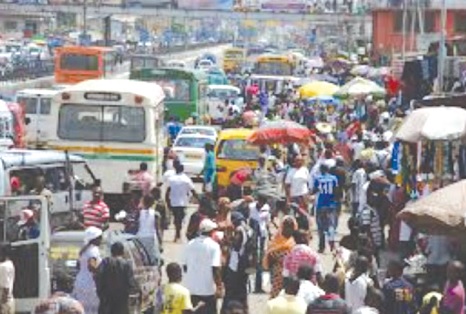
In his inaugural speech on January 7, 2025, President Mahama outlined his vision of a 24-hour economy where “…our markets are alive and bustling at all hours, with responsive public services accessible at all times so that businesses can operate flexibly to meet diverse demands.
Young people, including entrepreneurs, can find opportunities regardless of traditional limitations…”
The President’s vision is derived from the 24-hour economy policy (24HE) outlined in the National Democratic Congress (NDC) Election 2024 Manifesto labelled Resetting Ghana for Jobs, Accountability and Prosperity.
I will outline an implementation strategy for 24HE in a series of articles.
Bottomline goal
The bottom-line goal of the 24HE is to create new decent jobs and reduce vulnerable work. In the current context of Ghana, decent work should at the minimum provide the worker a living wage; social security and national insurance; and workplace safety, welfare and health.
Expected results
The Mahama administration has to create 1.7 million new decent jobs in the next four years to reduce the current unemployment rate of 14.7 per cent.
This target is based on the fact that there were 2.1 million unemployed persons and another 8.2 million persons in vulnerable work per the Ghana Statistical Service’s (GSS) Labour Statistics for 2023 Quarter 3 (the most recent data).
In addition, only 44 per cent of the 375,000 persons that enter the labour force each year are employed leaving 172,000 persons to be added to the multitude of unemployed annually.
The administration has to set a target to reduce existing vulnerable work. Vulnerable workers typically have low or irregular income, no social protection, and low health and safety at work.
The number of vulnerable workers in the Ghanaian economy cuts across all sectors and includes farmers, fisherfolks, traders, kayaye, okada, trotro drivers, hawkers and artisans. Some vulnerable workers do not consider themselves employed.
Foundation, implementing 24HE
The foundation for implementing 24HE consists of four elements; good governance, peace and security, macro-economic stability, and physical and digital infrastructure.
First, good governance boosts investments, improves government credibility and political stability and controls corruption which in turn leads to employment and the development of a nation.
However, the Worldwide Governance Indicators of the World Bank indicate that Ghana deteriorated on the elements of voice and accountability, rule of law, and control of corruption between 2016 and 2023.
Chapter 6 of the NDC 2024 Manifesto outlines the administration’s good governance and fighting corruption agenda. President Mahama’s appointment of a Senior Presidential Advisor for Governmental Affairs and Presidential Advisor for the National Anti-Corruption Programme provides additional impetus to the work of the National Commission for Civic Education (NCCE), Commission for Human Rights and Administrative Justice (CHRAJ), responsible ministries and agencies, and civil society organisations.