In Brussels, at past EU leaders’ summits, Emmanuel Macron has at times been accused of trying to steal the limelight.
He certainly managed that on Sunday night. Although probably not in the way he’d have liked.
As votes for the European Parliament were still being counted, Mr Macron dominated the headlines.
His drubbing in the poll by French hard-right nationalists had been expected. His decision to dissolve France’s national parliament as a result, came as a shock.
He had played with the idea last year, after getting trounced in France’s last general election but few expected this move now.
It’s a huge gamble. From a position of weakness.
Emmanuel Macron describes himself as a centrist and a passionate European.
This snap general election, taking place in two rounds on 30 June and 7 July, could result in him having to work alongside a French prime minister from the Eurosceptic far right.
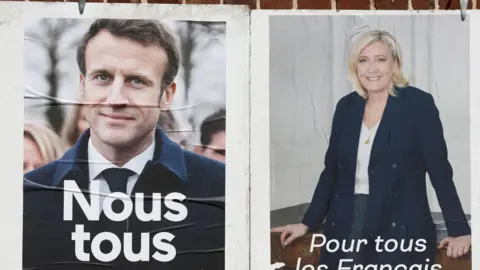
Marine Le Pen, regularly portrayed as his political nemesis, declared on Sunday that her party was ready to govern.
It’s happened before in France that the president, who is the country’s most powerful politician, and the prime minister, hail from different political parties.
But if the new prime minister were to come from the far right, that would be a first for France.
Marine Le Pen has worked hard in recent years to try to broaden the appeal of her political movement and to soften its extremist image.
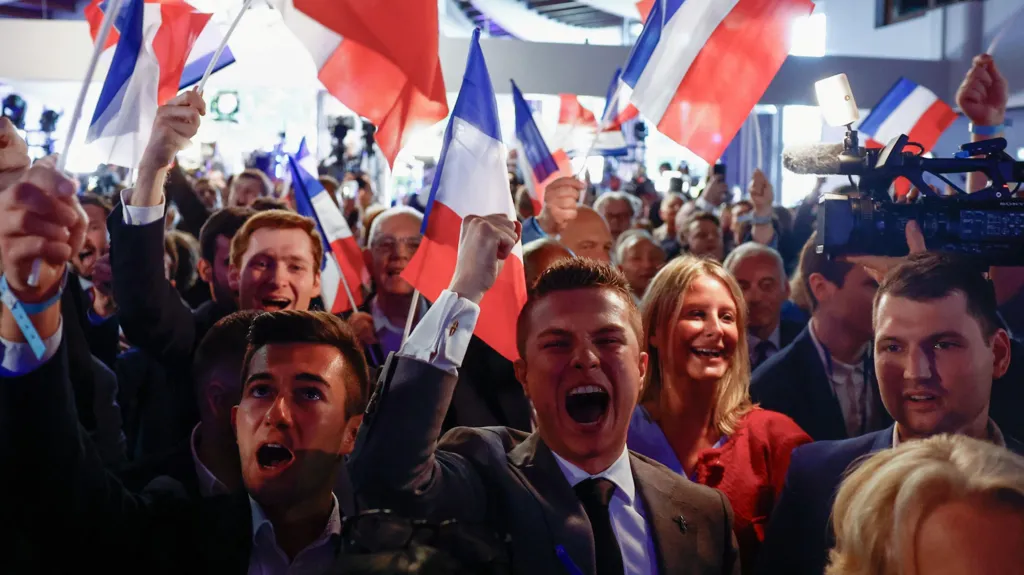
She and her supporters hope this significant victory at EU level (her National Rally party garnered more than double the number of votes of President Macron’s Renaissance party) will translate into huge wins in the snap election back home.
Her dream would be that those successes would then bring her, or her hugely popular prodigee, the 28-year-old Jordan Bardella, a big stride closer to eventually becoming French president – something she’s attempted and failed to achieve a number of times before. The next presidential vote in France is scheduled for 2027.
 Reuters
Staying with this election for the European Parliament, the hard right and nationalist right made gains in many parts of the EU, with voters worried about migration, inflation and the cost of environmental reforms.
But whether they will be able to really influence future EU policy is unclear.
The majority of seats in the EU chamber where the bloc’s laws are debated, modified, passed or rejected, remain firmly in the hands of centrist parties.
To affect EU policy, hard-right parties from across the bloc will have to unite, to give them clout.
And that’s a challenge. They have differing national priorities and some deep-seated differences, like how far to support Ukraine against Russia.