The conflict in Ukraine is about to enter its third calendar year. The front lines have hardly moved in the last few months but could the course of the war change in 2024?
President Volodomyr Zelensky has admitted his country’s spring offensive has not been the success he hoped. Russia still controls about 18% of Ukraine.
We asked three military analysts how they think events may unfold in the coming 12 months.
War will drag on but not indefinitely
Barbara Zanchetta, Department of War Studies, King’s College London
The prospects for an end of the war in Ukraine remain bleak. Compared with this time last year, Vladimir Putin is stronger, politically more than militarily.
The situation on the battleground remains uncertain. Recently, Ukraine’s winter offensive seems to have come to a halt. But there is no Russian breakthrough, either. More than ever, the outcome depends on political decisions made miles away from the centre of the conflict – in Washington and in Brussels.
The West’s impressive show of unity displayed in 2022, and that endured throughout 2023, is starting to vacillate.
The US defence aid package is held hostage by what President Biden rightly labelled “petty politics” in Washington. And the future of the EU’s economic aid is seemingly dependent on Hungary’s incongruous stance.
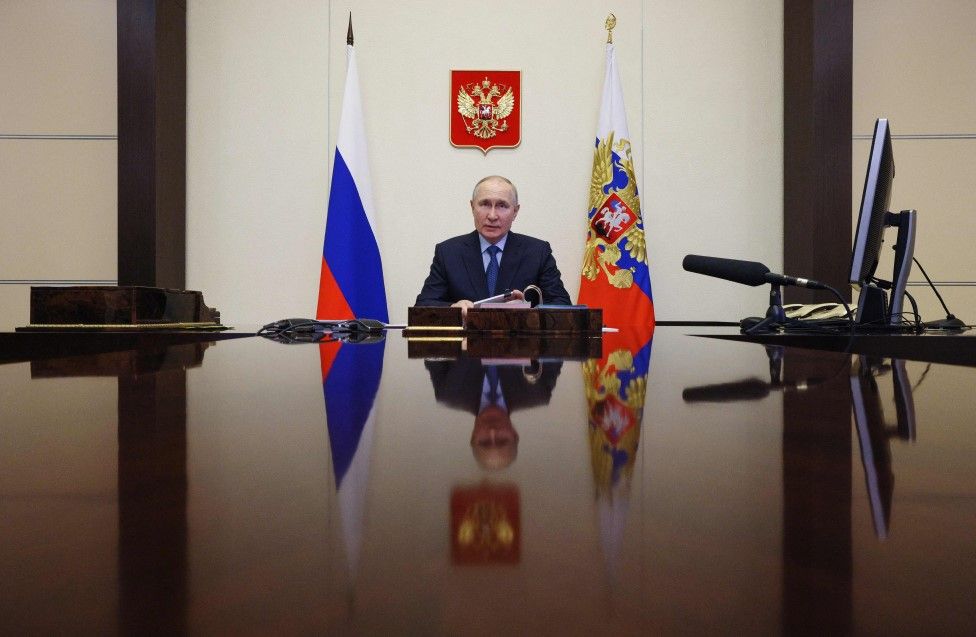
Hesitation in the West’s capitals has emboldened Putin. His recent public appearances and defiant statements demonstrate that as far as he is concerned, Russia is in this for the long haul.
So, will the West have the strength and stamina to continue to oppose him and all that he represents?
The EU’s decision to open membership talks with Ukraine and Moldova is more than just symbolic. It implicitly means continued backing for Kyiv, as a future in the EU for Ukraine would be impossible with a full-blown victory for Russia.
In Washington, a complete reversal of policy is unlikely.
While it is tempting to depict doomsday scenarios for US assistance as Trump’s ratings rise in the polls, the former president, amid all the theatrics, did not walk out from Nato in 2016. And he would not singlehandedly be able to revolutionise America’s 75-year-long transatlantic partnership.
This is not to say that the recent cracks in the Western camp are meaningless. For the West, and therefore for Ukraine, 2024 will be more difficult.
For democracies, long-term consensus in support for war has always been more complicated than for autocrats with no accountability.
While it is likely that the war will drag on throughout 2024, it cannot drag on indefinitely.
With Western hesitancy bolstering Russia, and in the absence of either a coup or a health-related issue leading to Putin’s demise, the only foreseeable outcome will be a negotiated settlement that for now both sides continue to refuse.