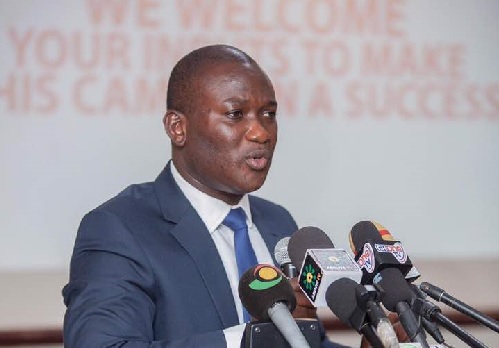
The Finance Minister, Ken Ofori-Atta, has emphasized the significance of the contentious Domestic Debt Restructuring Programme (DDEP).
According to the minister, the programme has given the government more financial flexibility.
Under the programme, domestic bondholders were asked to exchange their instruments for new ones.
On Monday, July 31, during the presentation of the 2023 Mid-Year Budget Review in Parliament, Ken Ofori-Atta acknowledged that the DDEP programme has effectively resolved the government’s cash flow and liquidity issues.
He expressed gratitude to all bondholders who took part in the programme.
“After three (3) months of negotiations with the different bondholder groups and amendments to the original terms, the government successfully completed the DDEP on February 14.”
“Total bonds outstanding at the settlement date amounted to GH¢126,978.5 million, of which GH¢29,286.2 million were held by Pension Funds, bringing the total eligible bonds to GH¢97,749.6 million. The Ministry received final participation of GH¢82,994.5 million, representing 84.9 per cent of total eligible bonds.”
“The DDEP has provided the government with increased fiscal flexibility and addressed cash and other liquidity constraints. Once again, we are grateful to all investors who participated in this exchange,” he said.
He repeated the government’s dedication to participating in additional talks regarding another phase of the DDEP.
“Mr Speaker, to complete the domestic debt operations, the government announced in April 2023 its intention to further pursue the discussions around the following domestic debt instruments, which were excluded from the DDEP perimeter”.
After the government requested assistance from the International Monetary Fund (IMF), the Bretton Woods institution established specific requirements that the government needed to fulfil.
One of the main requirements was for the government to manage its rapidly increasing debt which led to the DDEP programme.