We cannot escape the necessity of relying on experts in various fields. Unavoidably, specialisation is pivotal in our decision-making. But the rate at which the Ghanaian media refers to everyone and anyone as an expert is becoming worrisome, or even problematic, without any exaggeration.
With the click of a button and the help of social media, everyone is suddenly an ‘expert’- economic expert, communication expert, soccer expert, financial expert, security expert, mental health expert, diet expert, childcare expert, the list is endless. The fact that social media makes anyone an expert doesn’t mean the traditional media – print, radio, and television- should also follow suit. It is very sad when you are watching or listening to the news, and they refer to some of their resource personnel as ‘experts’.
While the question of who should be considered as an expert can grow even more detailed and technical, it cannot be discounted that certain qualities make up who an expert is and they are straightforward.
The Oxford dictionary defines an expert as ‘one with the special skill or knowledge representing mastery of a particular subject whilst the Cambridge dictionary defines an expert as ‘ a person with a high level of knowledge or skill relating to a particular subject or activity ’.
From the above definitions, one can deduce that an expert is a specialist in a specific field, with particular skills or knowledge.
Further readings postulate that an expert is someone who achieves exceptionally high-performance levels on a particular task or within a specific subject matter. They are also typical of the most informed people in their field and achieve far beyond what the average person does. Some of the critical elements of expertise include skills, advanced and in-depth knowledge, and proof of achievements such as recognition or awards. Experts are people who have seen it all, and if they haven’t seen it all, they have at least seen most of it. This means they have a considerable wealth of experience to share and more importantly, they anticipate impending trends in a subject area before others recognize them.
Indeed, most discussions that are monitored in the media, especially both radio and television are political discourses with a much-baised tone. On occasion, when an expert is invited to share his or her opinion, the audience wants a well-informed discussion. Sadly and regrettably we are seeing a lot of questions being asked to the wrong kinds of people. The worrying trend which is becoming a norm in the current media landscape is how suddenly everyone becomes an expert. Eg, how can someone who has just completed a security course online be referred to as a security expert? Or someone who has not proven any extensive knowledge in the area of computing suddenly becomes an IT expert and someone with no practical knowledge in governance be called a governance expert? After listening to them, one wonders why the media outlets keep taking their audience for granted. Why are they always in a hurry to interview just anyone on a current topical issue by qualifying such a person as an expert?
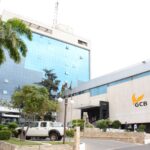
I don’t need to mention the names of these media organizations that have become notoriously good at calling just anyone an expert but we all know them. I have observed that the Ghana Broadcasting Corporation (GBC) and other state media houses have a high standard as to who they tag as an expert and it’s essential that other media houses take a cue from it.
Ours is a growing democracy, in which citizens require reliable information to make decisions. In today’s internet world, everyone gets to say their piece but the traditional media must take a front view and do the right thing. Much of our understanding and knowledge of issues is based on the authoritative pronouncements of experts thus the media must not toy with it.